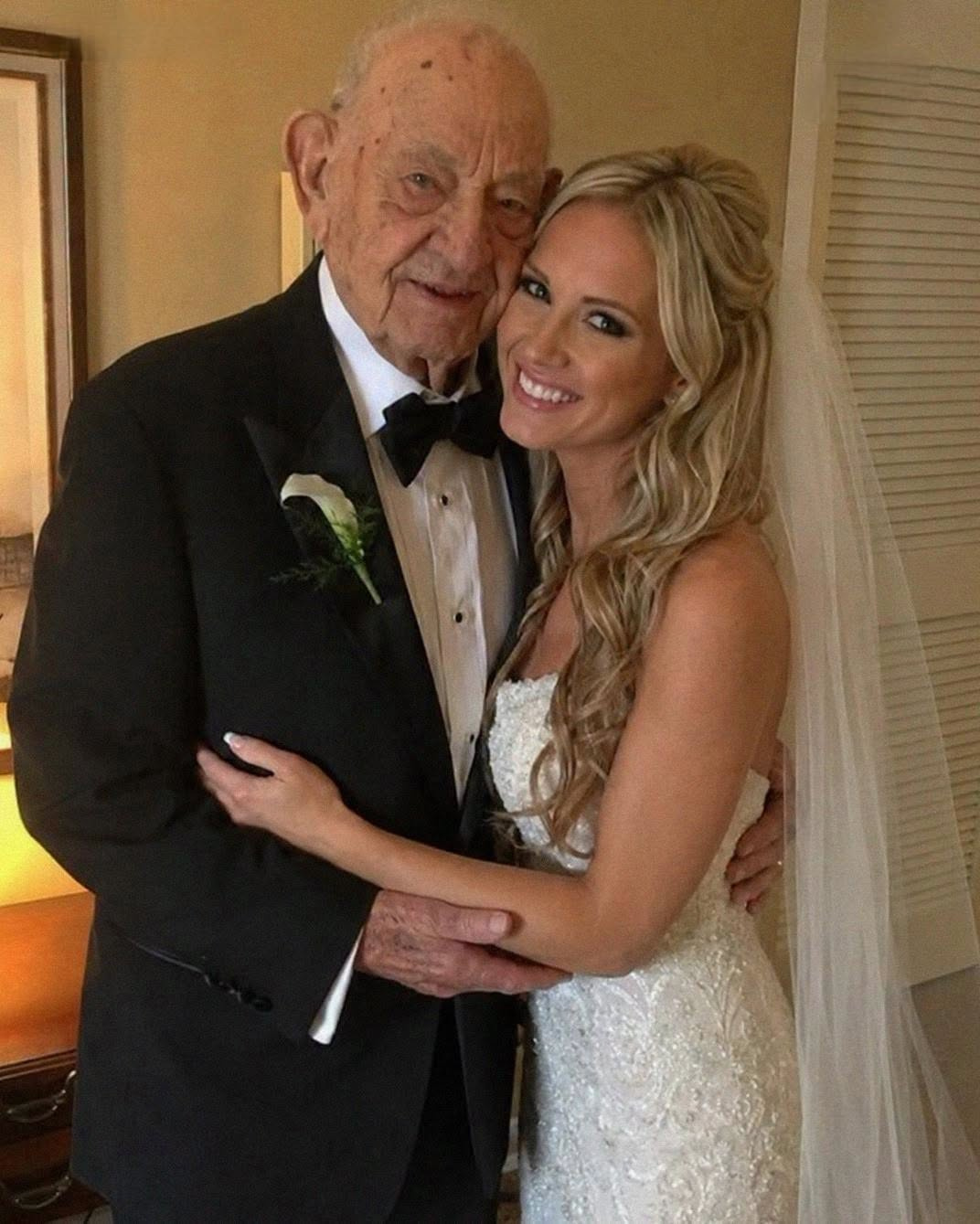
At twenty-nine, I believed I had discovered the easiest path to the life I had always imagined. Marrying a wealthy man decades older than me seemed like the perfect shortcut to luxury, comfort, and financial security. Everything appeared to be unfolding exactly as planned—until the middle of our wedding ceremony, when my seventy-eight-year-old fiancé took the microphone, looked directly at me, and revealed a secret that instantly changed the meaning of everything I thought I knew about him, his fortune, and our future together.
My name is Sally, and I always preferred dreaming about elegant homes over building a traditional career. While my mother encouraged me to submit job applications and focus on financial independence, I spent my time browsing listings for sprawling estates and imagining the lifestyle I hoped one day to enjoy. My parents repeatedly reminded me that marriage should never be viewed as a financial plan, but I dismissed their concerns, convinced that I would eventually meet someone who had already built the life I wanted.
That person appeared to be Walter. We met by chance at an upscale restaurant where he was dining alone. Dressed in an impeccably tailored suit and wearing an expensive watch, he carried himself with quiet confidence rather than flashy displays of wealth. When an accidental spill threatened to damage his phone, I reacted quickly to help, and our conversation began. What followed was a whirlwind romance filled with elegant dinners, concerts, fresh flowers, and invitations to exclusive events. Walter never spoke openly about his finances, but his lifestyle seemed to tell the story on its own. When he proposed with a striking diamond ring, I accepted almost immediately.
As the wedding drew closer, however, unexpected changes began to appear. His luxury car was suddenly unavailable and replaced by an aging sedan. He explained that financial paperwork had temporarily limited access to some of his investments, and before long he was asking me to cover restaurant bills and even contribute toward part of his wedding attire. My parents grew increasingly suspicious, warning me that something did not seem right, but I ignored every concern. I had already pictured the grand home Walter had promised we would one day share, and I refused to believe those dreams could be slipping away.
Surprisingly, as the symbols of wealth gradually disappeared, our relationship changed in ways I had never expected. Instead of expensive evenings in elegant restaurants, we wandered through local markets, attempted homemade meals that rarely turned out well, and spent quiet nights watching old films together. Without realizing it, I began enjoying Walter’s company more than the luxurious lifestyle that had first attracted me. The conversations became richer, the laughter more genuine, and for the first time I found myself focusing less on what he owned and more on who he was.
A few days before the wedding, a courier delivered a brass key tied with a blue ribbon. When I asked Walter what it opened, he simply smiled and told me I would understand soon enough. His mysterious answer stayed with me as we walked down the aisle, but nothing could have prepared me for what happened next. In the middle of exchanging our vows, Walter asked for the microphone, turned toward our guests, and calmly announced that there was something everyone—including me—needed to know.
Looking directly into my eyes, he explained that many people assumed he was the owner of an enormous fortune. Then, after a brief pause that left the room completely silent, he revealed the truth. “My bride believes she’s marrying my wealth,” he said gently. “But the reality is different. I don’t own that fortune—I simply manage and protect it.” In that instant, every assumption I had made about our future was forced into question, and I realized that the life I thought I had carefully planned might have been built on expectations rather than reality.