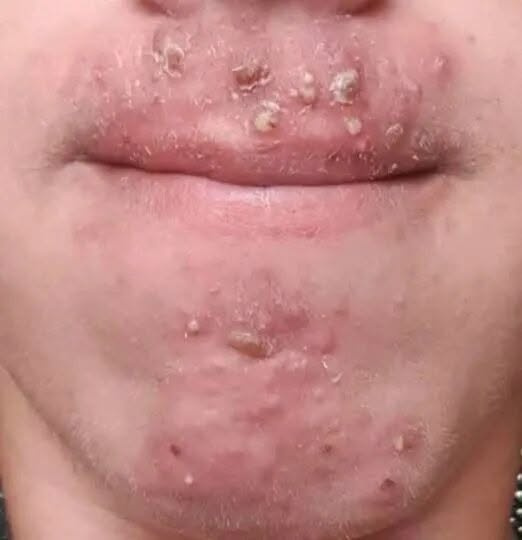
A burning red ring around your mouth may seem like nothing more than dry, irritated skin at first glance. Many people assume it’s the result of cold weather, dehydration, or using the wrong lip balm, so they apply moisturizer and expect it to disappear within a day or two. But sometimes that innocent-looking redness tells a very different story. What begins as a small patch of irritation can gradually spread outward, becoming increasingly inflamed, cracked, or crusted. In certain cases, it may even signal a contagious skin infection or an inflammatory condition that requires proper medical treatment rather than trial-and-error home remedies. Ignoring the early warning signs can allow the problem to worsen before you realize what’s happening.
The skin surrounding the mouth is especially delicate. Every day it faces constant movement from talking, eating, smiling, and drinking, while also being exposed to saliva, food particles, cosmetics, shaving products, weather changes, and countless skincare ingredients. Because this area works so hard, even small disruptions to the skin barrier can quickly become noticeable. What begins as mild redness can evolve into persistent irritation if the underlying cause isn’t addressed.
One of the most common mistakes people make is assuming that all facial rashes have the same cause. In reality, redness around the mouth can result from several completely different conditions. Sometimes it’s simple irritation from harsh cleansers or frequent lip licking. Other times it may be an allergic reaction to toothpaste, cosmetics, sunscreen, or skincare products. In some cases, however, bacterial infections such as impetigo or inflammatory conditions like perioral dermatitis may be responsible. Each requires a different approach, which is why self-diagnosis often leads to frustration.
Impetigo is a highly contagious bacterial skin infection that frequently begins as small red sores or irritated patches before developing honey-colored or yellowish crusts. It spreads easily through direct skin contact or by sharing towels, razors, pillowcases, or other personal items. Children commonly develop impetigo, but adults can experience it as well, particularly if the skin has been broken by scratches, eczema, or other irritation. Without appropriate treatment, the infection may continue spreading to nearby areas or to other people.
Perioral dermatitis, on the other hand, is not contagious but can be equally frustrating. It often appears as clusters of tiny red bumps, burning sensations, dry flaky skin, or persistent redness surrounding the mouth while usually sparing the skin immediately bordering the lips. Although the exact cause isn’t always clear, it has been linked to prolonged use of topical steroid creams, certain cosmetics, fluoridated toothpaste in some individuals, heavy moisturizers, and skin barrier disruption. Ironically, many people unknowingly make the condition worse by applying stronger creams in an attempt to calm the redness.
Topical steroid creams deserve special attention because they can temporarily reduce redness while quietly allowing certain conditions to worsen over time. People often feel encouraged when the rash initially improves, only to experience an even more severe flare once the medication is stopped. This cycle may continue repeatedly until the underlying condition is properly identified and treated. For that reason, using steroid creams on facial rashes without medical guidance is generally discouraged.
Another common reaction is excessive cleansing. When people notice redness or bumps, they often begin washing the area more frequently with stronger cleansers, exfoliating products, alcohol-based toners, or acne treatments. Unfortunately, these products can strip away the skin’s natural protective barrier, increasing irritation rather than resolving it. Damaged skin becomes more vulnerable to bacteria, inflammation, and prolonged healing.
Picking, scratching, or peeling crusts can also delay recovery. While it may be tempting to remove flaky skin or scabs, doing so creates tiny openings that increase the risk of bacterial infection and scarring. Every time the skin barrier is disturbed, the healing process essentially starts over again. Allowing damaged skin to recover undisturbed often produces better results than constantly trying to “fix” it.
If the rash begins producing yellow crusts, fluid-filled blisters, oozing patches, rapidly spreading redness, increasing pain, fever, or swelling, medical evaluation becomes especially important. These symptoms may indicate bacterial infection requiring prescription antibiotics or another condition that needs prompt treatment. Early intervention often leads to faster recovery and reduces the chance of complications.
Even when symptoms remain mild, persistent redness lasting several weeks deserves professional attention. Dermatologists and healthcare providers can distinguish between infections, allergic reactions, eczema, fungal conditions, contact dermatitis, rosacea, and perioral dermatitis—many of which look surprisingly similar despite requiring completely different treatments. What appears obvious in the mirror may not reflect the true underlying cause.
During the healing process, a gentle skincare routine is usually the safest approach unless otherwise directed by a healthcare professional. Washing the area with a mild, fragrance-free cleanser, avoiding unnecessary products, and protecting the skin from additional irritation gives the damaged barrier an opportunity to recover. Simplicity often proves far more effective than layering multiple treatments without knowing the diagnosis.
Good hygiene also helps reduce the spread of contagious infections when bacteria are involved. Avoid sharing towels, washcloths, razors, makeup, lip balm, or pillowcases if infection is suspected. Frequent handwashing after touching affected skin further reduces the chance of spreading bacteria to other areas of the body or to family members.
It’s equally important to pay attention to products used around the mouth. Toothpaste, lip cosmetics, facial creams, sunscreens, shaving products, and even chewing gum ingredients may contribute to irritation in sensitive individuals. Identifying potential triggers sometimes requires temporarily simplifying routines before gradually reintroducing products one at a time under medical guidance.
Stress, hormonal changes, weather extremes, and underlying skin conditions may also influence how facial rashes develop or heal. Although these factors don’t necessarily cause infections directly, they can weaken the skin barrier or increase susceptibility to inflammation. Supporting overall skin health through adequate sleep, balanced nutrition, hydration, and appropriate medical care may improve recovery in many situations.
Perhaps the most important lesson is that not every red patch around the mouth should be treated as simple dryness. While many cases do result from harmless irritation, others require targeted medical treatment that over-the-counter products simply cannot provide. Guessing at the cause often leads people through weeks of unnecessary discomfort while the condition quietly progresses.
Fortunately, most conditions affecting the skin around the mouth respond well once they’re accurately diagnosed. Whether the cause is bacterial, inflammatory, allergic, or related to another skin disorder, effective treatments are available. The key lies in recognizing when home care is no longer enough and seeking professional guidance before complications develop.
In the end, your skin often communicates long before serious problems appear. Redness, persistent irritation, crusting, unusual bumps, burning sensations, or spreading inflammation aren’t simply cosmetic concerns—they’re signals worth paying attention to. Instead of relying on random internet recommendations or repeatedly changing products, choosing gentle care and consulting a healthcare professional when symptoms persist offers the safest path toward healing. Sometimes the smallest changes on the skin are simply temporary irritation. Other times, they’re your body’s quiet reminder that it needs a little extra help.