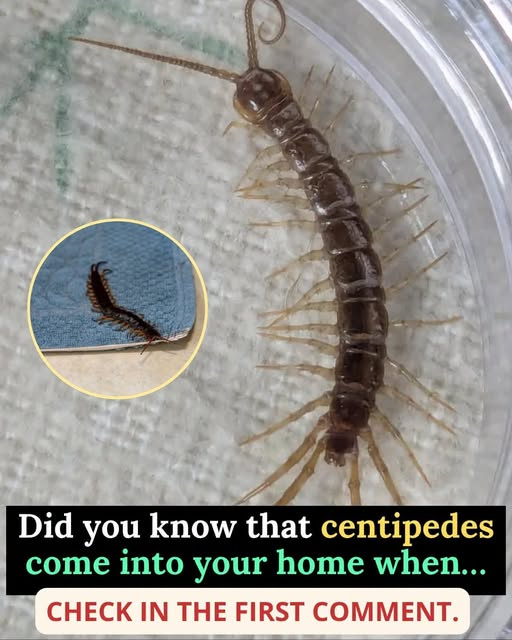
A streak of tiny legs flashes across your floor, and your heart instantly skips a beat. For a brief moment, it feels as though something is terribly wrong with your home. The unexpected movement, the incredible speed, and the unfamiliar appearance of a house centipede can trigger an almost instinctive reaction to crush it before it disappears into the shadows. But what if that unsettling visitor isn’t simply a creepy intruder? What if it’s quietly delivering a message about your home that most people completely overlook? Before you reach for a shoe, it’s worth understanding why that centipede appeared in the first place—and what its presence may be trying to tell you.
House centipedes are not random invaders. Unlike insects that wander indoors by accident, they actively seek out environments that provide exactly what they need to survive. Moisture, darkness, and an abundant food supply are their greatest attractions. Bathrooms, laundry rooms, basements, crawl spaces, garages, and even the areas beneath kitchen sinks create ideal conditions for these fast-moving hunters. If you notice one racing across the floor, it may be pointing to hidden dampness that has gone unnoticed behind walls, under flooring, or around plumbing fixtures.
Moisture is one of the biggest clues a centipede can reveal. Even when your home appears perfectly clean and dry, there may be humidity trapped in places you rarely inspect. A slow plumbing leak, poor ventilation, condensation around pipes, or excessive humidity can create small pockets of dampness that attract insects. Because house centipedes rely on moist environments to avoid drying out, their appearance often signals that certain areas of your home deserve a closer inspection before bigger problems such as mold or water damage develop.
Just as important as moisture is food. House centipedes are predators, not scavengers. They don’t feed on wood, clothing, furniture, or household items. Instead, they hunt other insects with remarkable efficiency. Cockroaches, ants, silverfish, termites, earwigs, spiders, bed bug nymphs, flies, moth larvae, and many other tiny pests are all potential meals. In fact, if you have enough food to support centipedes, it often means there are other insects living in your home that you haven’t even noticed yet. The centipede is simply exposing an ecosystem that already exists.
One reason house centipedes are such effective hunters is their incredible speed. Their long legs allow them to sprint across floors and walls much faster than many other household insects. They usually emerge at night when their prey is most active, silently patrolling dark corners and hidden spaces while people sleep. Because they prefer to avoid humans, seeing one during the day may indicate that its hiding place has been disturbed or that its food sources have become more active than usual.
Although their appearance can be startling, house centipedes are generally harmless to people. They are not aggressive and rarely attempt to bite humans. While they do possess venom used to subdue their insect prey, their tiny mouthparts usually cannot penetrate human skin, and bites are uncommon. Even when a bite does occur, it typically causes only mild, temporary discomfort similar to a small insect sting. For most people, they pose far less risk than many of the pests they naturally control.
In many ways, the house centipede acts as a natural pest-control service. Every night, it quietly reduces populations of insects that could otherwise reproduce rapidly inside your home. Rather than multiplying into an infestation itself, a house centipede spends its life hunting the creatures many homeowners spend hundreds of dollars trying to eliminate. While few people enjoy sharing their home with them, their presence often means fewer cockroaches, fewer silverfish damaging books and paper, fewer ants exploring kitchens, and fewer spiders building webs in hidden corners.
That doesn’t necessarily mean you should encourage centipedes to stay indoors. Instead, the goal is to remove the conditions that attract both the predator and its prey. Repairing plumbing leaks, reducing indoor humidity with proper ventilation or dehumidifiers, sealing cracks around windows, doors, and foundations, and keeping storage areas clean and dry all help create an environment that is less inviting for insects of every kind. Once their food supply disappears and moisture levels decrease, house centipedes usually move elsewhere on their own.
Simple maintenance can make a significant difference. Regularly vacuuming baseboards and corners removes insect eggs and hiding places. Storing cardboard boxes off damp basement floors, cleaning up food crumbs promptly, and sealing entry points around utility pipes reduce opportunities for pests to establish themselves. Improving airflow in bathrooms and laundry rooms also helps eliminate the damp conditions that many insects—and the centipedes that hunt them—depend on.
Many people assume that finding a centipede means their home is dirty, but cleanliness alone is rarely the deciding factor. Even spotless homes can develop moisture problems or occasional insect activity, especially during humid seasons or after heavy rainfall. A centipede isn’t necessarily a sign of neglect; it’s often simply evidence that nature has found a small opening to do what it has always done—maintain balance by keeping insect populations under control.
The next time a blur of legs races across your floor, it may still surprise you. That’s perfectly natural. But instead of seeing only a frightening intruder, consider what that tiny hunter might be revealing. It could be pointing toward hidden moisture, unnoticed insects, or small maintenance issues that deserve attention. By understanding the role of the house centipede, fear gives way to awareness. Your home becomes more than four walls—it becomes part of a delicate ecosystem where even the creatures you least expect can quietly help keep nature in balance.