We often think of sleep as a time when the body simply shuts down and rests. In reality, countless processes continue working throughout the night, and even something as simple as the way you position your body can influence how comfortably those systems function. Gravity continues to affect your organs, joints, muscles, and airways while you sleep, meaning your preferred sleeping position may either support your body’s natural functions or contribute to certain types of discomfort. Many people never consider that a small adjustment in posture could make a noticeable difference until they begin experiencing persistent symptoms.
The position you sleep in is more than just a personal preference. Night after night, it influences digestion, breathing, circulation, spinal alignment, and pressure on different parts of the body. While no single sleeping position is ideal for everyone, understanding how each one affects your body can help you make choices that better match your individual health needs and improve overall sleep quality.
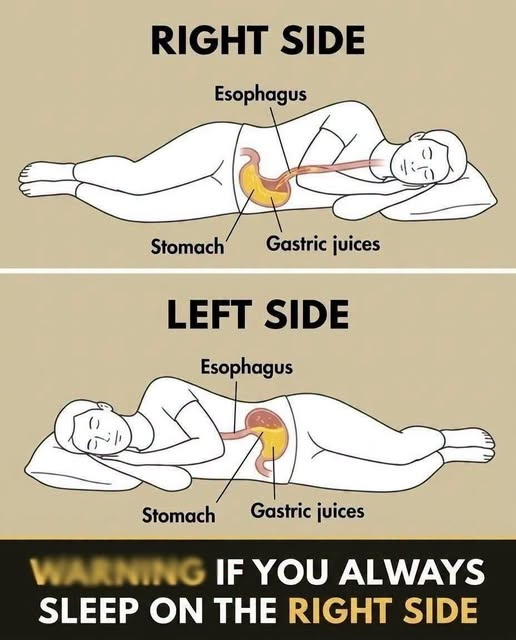
For many people, sleeping on the left side is often recommended because it may help reduce acid reflux and nighttime heartburn. Since the stomach naturally sits slightly to the left, this position can help keep stomach acid where it belongs, making it less likely to flow back into the esophagus during sleep. Some healthcare professionals also suggest left-side sleeping during pregnancy because it may support healthy blood circulation to both the mother and developing baby while reducing pressure on certain blood vessels.
Sleeping on the right side is also comfortable for many individuals and is generally considered a healthy position. However, people who frequently experience acid reflux or heartburn may notice that lying on the right side sometimes allows stomach acid to move upward more easily, making symptoms worse during the night. Although this does not happen to everyone, individuals with chronic reflux often find greater relief when sleeping on their left side instead.
Back sleeping offers its own advantages. Because the head, neck, and spine can remain in a relatively neutral position, sleeping on the back may help maintain proper spinal alignment and reduce unnecessary pressure on certain joints. However, this position is not ideal for everyone. People who snore loudly or suffer from obstructive sleep apnea often experience worsening symptoms when lying flat on their backs, as gravity can allow the tongue and soft tissues of the throat to partially block the airway, making breathing more difficult during sleep.
People who struggle with lower back discomfort frequently benefit from sleeping on their side with a pillow placed between the knees. This simple adjustment helps keep the hips aligned, reduces twisting of the spine, and may relieve pressure on the lower back throughout the night. Similarly, selecting a supportive mattress and pillow that suit your preferred sleeping position can further improve comfort and reduce unnecessary strain on muscles and joints.
The most effective sleeping position is ultimately the one that provides both comfort and support while taking your personal health concerns into account. There is no universal posture that works perfectly for everyone. Factors such as chronic pain, pregnancy, acid reflux, sleep apnea, snoring, previous injuries, and individual anatomy all influence which position may be most beneficial. Paying attention to how you feel when you wake up each morning can provide useful clues about whether your current sleeping posture is helping or contributing to discomfort.
If you would like to improve your sleep, there is no need to force dramatic changes overnight. Small adjustments are often easier to maintain and can gradually become comfortable with time. Experimenting with additional pillows, modifying your sleeping position slightly, or discussing persistent sleep problems with a healthcare professional can all contribute to better rest and improved overall well-being. By listening to your body’s signals and choosing a position that supports your individual needs, your nightly sleep can become not only more comfortable but also a valuable part of maintaining your long-term health.