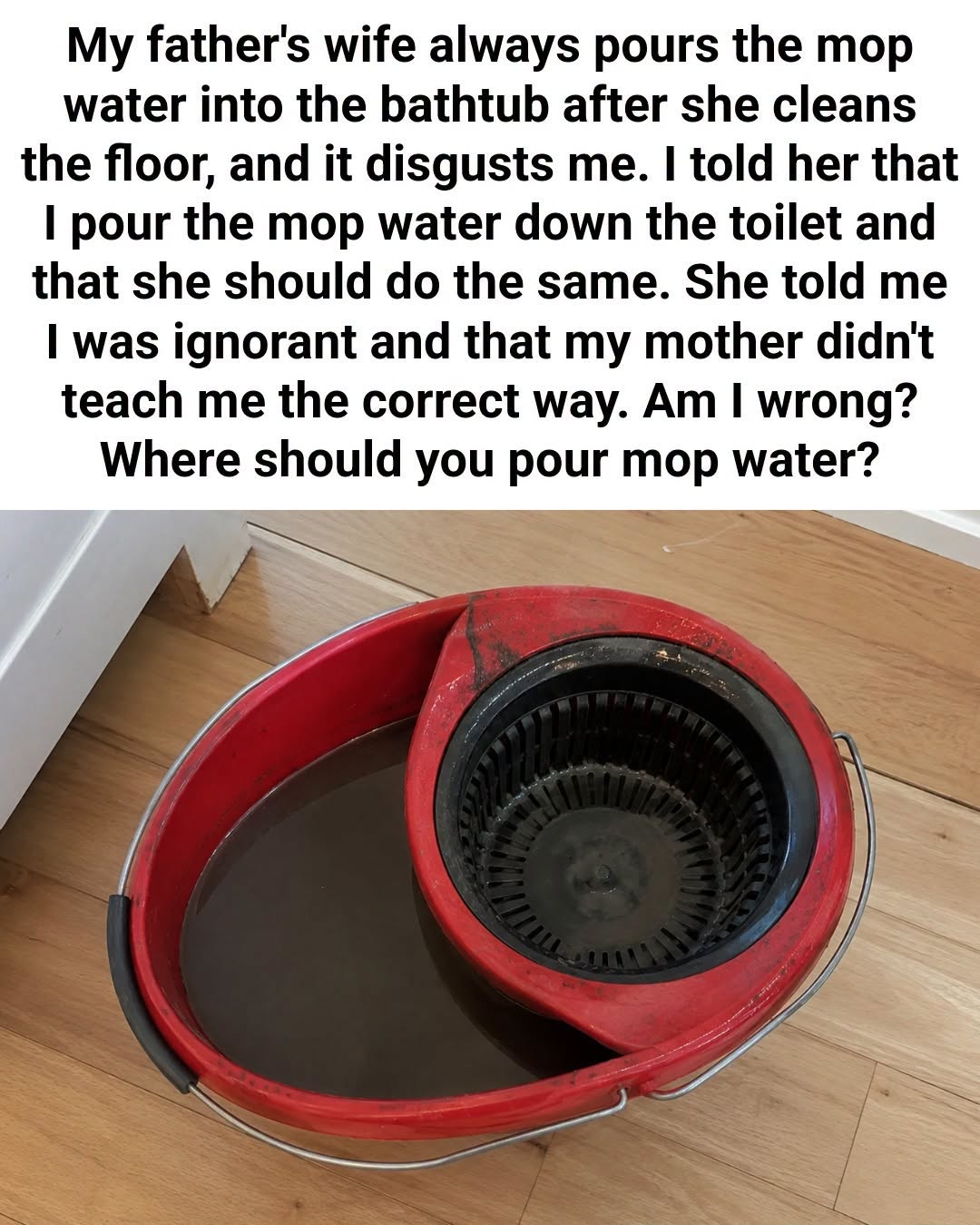
You’re standing in the middle of the room holding a heavy bucket of gray, murky mop water, and suddenly a surprisingly simple chore turns into an unexpected question. Should you pour it into the toilet or empty it down the bathtub drain? It seems like such a small decision that most people never think twice about it—until someone points out that one choice may be cleaner, safer, and more practical than the other. What appears to be an ordinary household task actually raises important questions about hygiene, plumbing, and the unwritten rules that help keep a home clean.
At first glance, dirty mop water may not seem particularly different from ordinary water. After all, it’s mostly water mixed with a little soap, right? In reality, every time you mop a floor, the bucket collects far more than visible dirt. Tiny particles of dust, pet hair, food crumbs, grease, bacteria, pollen, and other debris become suspended in the water. If you’ve cleaned beneath furniture, around entryways, or near garbage bins, the bucket may also contain grime that most people would never want anywhere near places used for bathing or preparing food.
Because of that, dirty mop water should be treated more like household waste than ordinary rinse water. While it may look harmless, it often contains contaminants collected from every corner of the floor. Disposing of it thoughtfully helps prevent unnecessary messes while protecting plumbing fixtures from avoidable problems.
For most homes, the toilet is generally considered one of the safest places to empty mop water. Toilets are specifically designed to handle waste along with suspended particles that would be more likely to cause problems in smaller drains. Their wider trapways and powerful flushing systems allow water and fine debris to move efficiently into the sanitary sewer or septic system.
Another advantage is hygiene. Toilets already serve as fixtures intended for waste disposal, making them a logical destination for dirty cleaning water. Once the bucket has been emptied, a quick flush helps carry the contents away without leaving residue where people routinely wash themselves.
Bathtubs present a different situation. Although the water will still flow into the plumbing system, bathtub drains are typically much narrower than toilet drains. Hair, dirt, grit, and other debris carried in mop water can gradually collect inside the drain, increasing the likelihood of slow drainage or future clogs.
Beyond plumbing concerns, there is also the issue of cleanliness. Bathtubs are spaces where people bathe, children play, and pets are often washed. Pouring dirty floor water into that same surface means the tub should be thoroughly cleaned and disinfected before anyone uses it again. Otherwise, invisible residues left behind could remain on the surface.
That doesn’t necessarily mean a bathtub should never be used. If no other option is available, emptying mop water into the tub can be acceptable, provided the tub is rinsed immediately and cleaned afterward with an appropriate bathroom cleaner. The important step isn’t simply where the water goes—it’s making sure the bathing surface is left sanitary afterward.
An even better option, when available, is a utility sink or laundry sink. These sinks are specifically intended for household cleaning tasks and are generally designed to handle dirtier water, cleaning tools, and maintenance activities. Many people consider them the ideal location for disposing of mop water because they combine convenience with practicality.
Utility sinks also make rinsing mop buckets, mop heads, and cleaning cloths much easier without involving fixtures intended for personal hygiene. If your home includes one, it is usually the preferred choice for this task.
Regardless of where the water is emptied, one simple habit can help protect your plumbing. Before pouring out the bucket, remove larger debris such as hair, lint, leaves, or food particles using a small strainer or by allowing the solids to settle before disposal. Keeping these materials out of drains reduces the chance of future blockages.
The cleaning solution used also deserves consideration. Mild household floor cleaners generally present fewer concerns when disposed of through sanitary plumbing systems according to product directions. However, highly concentrated chemicals, solvents, or products not intended for drain disposal should always be handled according to their manufacturer instructions.
For homes using septic systems, extra care may be necessary. Excessive amounts of harsh disinfectants or strong chemical cleaners can interfere with the beneficial bacteria that help septic systems function properly. Following label recommendations and using cleaning products responsibly helps protect both plumbing and the environment.
Storm drains are another place where mop water should never be emptied. Unlike household sewer systems, many storm drains discharge directly into nearby rivers, lakes, or streams without treatment. Pouring cleaning chemicals or contaminated water into those drains can contribute to environmental pollution.
The kitchen sink is also generally a poor choice. Besides introducing dirt and bacteria into an area used for food preparation, grease and debris collected from floors may contribute to drain buildup over time. Keeping cleaning waste separate from food-related spaces is a sensible hygiene practice.
Shared homes introduce another consideration: courtesy. Different households often develop their own routines regarding where cleaning water should be disposed of. If you’re helping someone else clean or staying in another person’s home, asking their preference avoids misunderstandings and shows respect for their household practices.
The same applies to workplaces, vacation rentals, and community facilities. Many commercial buildings have designated utility sinks specifically intended for janitorial tasks. Using those fixtures instead of bathroom or kitchen sinks helps maintain proper sanitation standards.
Once the bucket has been emptied, don’t forget about the bucket itself. Rinsing it thoroughly and allowing it to dry helps prevent unpleasant odors, bacterial growth, and residue from building up between cleaning sessions. Mop heads also benefit from being washed and dried completely after use.
Small cleaning habits often have surprisingly large effects over time. Proper disposal of mop water protects plumbing, maintains cleaner bathrooms, reduces unnecessary contamination, and helps extend the life of household fixtures.
Although there may be occasional situations where one option is more practical than another, a simple guideline works well in most homes. If a utility or laundry sink is available, use that first. If not, the toilet is usually the next best everyday choice because it is designed for waste disposal. The bathtub can serve as a temporary alternative when necessary, provided it is thoroughly cleaned afterward.
In the end, disposing of mop water isn’t simply about getting rid of a bucket of dirty liquid. It’s one of those small household decisions that quietly reflects good hygiene, thoughtful maintenance, and respect for the spaces we share. A few extra seconds of care today can prevent plumbing problems, unnecessary cleaning, and uncomfortable surprises later on.