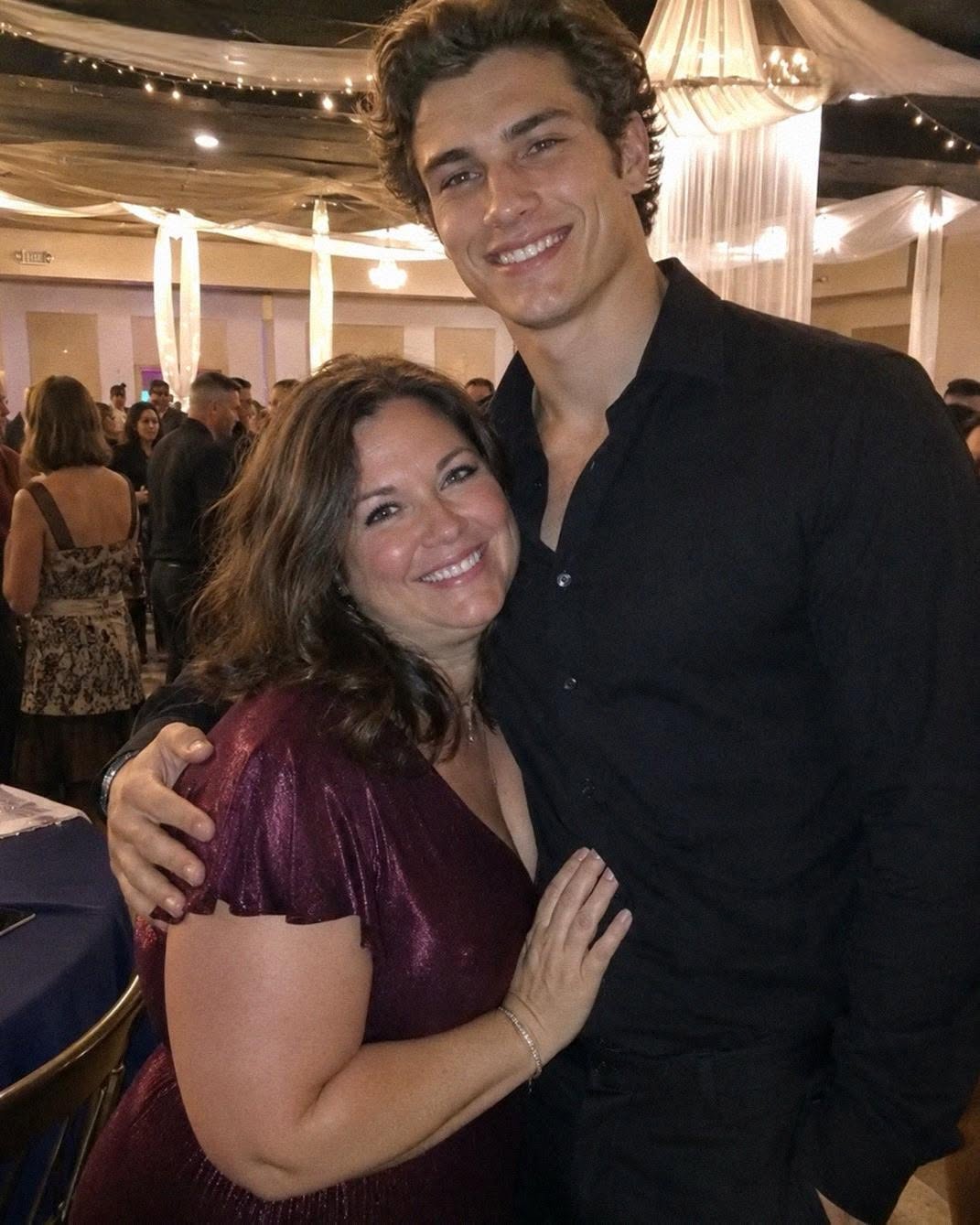
I entered that old gymnasium carrying a reputation I never deserved. To my ex-husband, I was the cold, distant woman he had been convinced to resent. But this time, I refused to walk in alone. Standing beside me was a professional actor I had hired—not to pretend we were in love, but to serve as a calm, impartial witness. For two decades, Miriam had manipulated nearly every chapter of my life, destroying my marriage and carefully shaping how others saw me. She expected our class reunion to become one final opportunity to humiliate me. Instead, the man she mocked as my “fake date” exposed a truth that shattered the image she had spent years constructing.
The reunion invitation arrived with the precision of a calculated insult. “Hope you’ll come. Mark will be there too—my fiancé now. Can’t wait to see you.” Reading those words felt like reopening a wound that had never truly healed. Back in high school, Miriam had made my life miserable. She ridiculed my secondhand clothes, mocked everything I did, and sarcastically labeled me “Miss Perfect” until the nickname followed me everywhere. Graduation didn’t end her influence. Somehow she found her way into my adult life as well, gradually convincing my husband, Mark, that I was emotionally distant, impossible to please, and incapable of real affection. By the time I realized how deeply she had poisoned his perception of me, our marriage had already collapsed under the weight of lies.
For days I stared at the invitation, torn between ignoring it and finally confronting the past. My closest friend, Claire, urged me to delete the message and move on, insisting that some battles weren’t worth fighting. But I was exhausted from watching someone else control the narrative of my life. For once, I wanted the opportunity to speak for myself. After giving it careful thought, I contacted a talent agency and hired Norton, an experienced actor known for his professionalism. I wasn’t interested in pretending to have a boyfriend. I simply wanted someone beside me who could see events as they unfolded and remind me that the version of myself I knew was real, regardless of what others believed.
The atmosphere inside the reunion was exactly as I remembered—uncomfortable, tense, and filled with carefully rehearsed smiles. Miriam stood at the center of the room surrounded by admirers, while Mark remained just behind her, following her every movement with quiet devotion. The moment she noticed me, I recognized the familiar look in her eyes. She approached confidently, dressed elegantly and prepared for another performance at my expense. Looking toward Norton, she smirked before delivering a sarcastic remark about someone “doing charity work” by accompanying me. For years I would have lowered my eyes and silently accepted the insult. This time, before I could respond, Norton calmly stepped forward.
“Jealousy has never been a flattering quality,” he replied evenly.
The comment wasn’t loud, but it landed with surprising force. A few nearby classmates laughed softly, and for the first time all evening, Miriam’s confident smile faltered. It was only a subtle change, but I could see the first crack appearing in the carefully polished image she had maintained for years.
As the evening continued, I found myself speaking with classmates who admitted they were surprised by how different I seemed from the woman they had heard about. Instead of finding the bitter, unfriendly person Miriam had described for years, they encountered someone willing to listen, laugh, and genuinely reconnect. Those conversations slowly reminded me that lies often survive only because the truth is never given the chance to speak.
Miriam, however, had no intention of allowing the evening to end peacefully. Eventually she walked onto the stage, picked up the microphone, and demanded everyone’s attention. With a theatrical smile, she announced that before anyone admired my handsome companion, they should know he wasn’t actually my boyfriend. According to her, I had hired him because no one else wanted to attend the reunion with me. The room fell silent. Every eye turned toward me as I felt years of humiliation threatening to return all at once. Mark lowered his gaze toward the floor, unable to look directly at me.
For a brief moment I considered leaving. It seemed easier than reliving another public embarrassment. As I turned away, Norton gently touched my arm.
“The decision is yours,” he said quietly.
Something inside me changed. I realized I was tired of running from a story someone else had written. Instead of walking out, I stepped onto the stage beside him and accepted the second microphone.
Norton looked directly at Miriam before speaking.
“That’s interesting,” he said calmly. “You already knew exactly why I was here. We used to work through the same talent agency. They eventually stopped hiring you because you repeatedly insulted people, reported them when they reacted, and then portrayed yourself as the victim.”
A ripple of confusion spread through the room. Conversations stopped. Faces turned from me toward Miriam. Even Mark’s expression shifted as he began reconsidering years of conversations he had accepted without question.
I took a slow breath before speaking.
“As a literature teacher,” I began, “I’ve spent years studying unreliable narrators. Tonight I’ve realized I’ve been living inside someone else’s version of my own story.”
The room remained completely silent.
“For twenty years, Miriam has controlled how people saw me. She convinced classmates I was arrogant. She convinced my husband I was incapable of love. She carefully planted doubts until her version of me became more believable than the real person standing here. Tonight, I’m simply asking you to consider whether you’ve ever actually heard my side.”
What happened next surprised everyone—including me.
A woman near the back slowly stood and admitted that Miriam had once spread false rumors that cost her a scholarship opportunity. Moments later, another classmate described how misleading stories had nearly derailed the beginning of his career. One after another, people shared experiences that sounded painfully familiar. The more they spoke, the more obvious the pattern became. It wasn’t a single misunderstanding. It was years of manipulation repeated with different victims.
Mark finally looked directly at me before turning toward Miriam.
“How much of what you told me was ever true?” he asked quietly.
She reached for his arm, attempting to pull him back into the familiar cycle of excuses, but this time he stepped away.
Before she could regain control of the room, Beth, the reunion organizer, approached the stage and gently removed the evening’s program from Miriam’s hands.
“I’m sorry,” Beth announced, her voice echoing through the gymnasium, “but someone else will be giving the closing remarks tonight.”
Without another word, Miriam walked out of the building. This time, no one followed her.
I stepped to the microphone one final time. After everything that had happened, I realized revenge no longer interested me.
“Here’s my wish for everyone here,” I said. “If you’ve spent years living inside someone else’s version of who you are, I hope you finally reclaim your own story. No one else should hold the pen that writes your life.”
The applause that followed wasn’t simply polite. It carried years of understanding, regret, and release.
Later, as I crossed the parking lot, Mark approached me with an apology that sounded sincere but arrived far too late. I listened for only a moment before quietly walking past him. He had chosen to believe assumptions instead of asking questions, and there were some consequences that no apology could erase.
I climbed into the car beside Norton, thanked him for standing beside me when I needed courage most, and looked back one final time at the school where I had once felt powerless. For years I believed that building belonged to Miriam—that she owned every painful memory inside it. But as we drove away, I understood something I never had before. She had never controlled my life. She had only controlled the story because I had allowed her to keep the microphone. That night, I finally took it back, and for the first time in twenty years, the voice telling my story was my own.