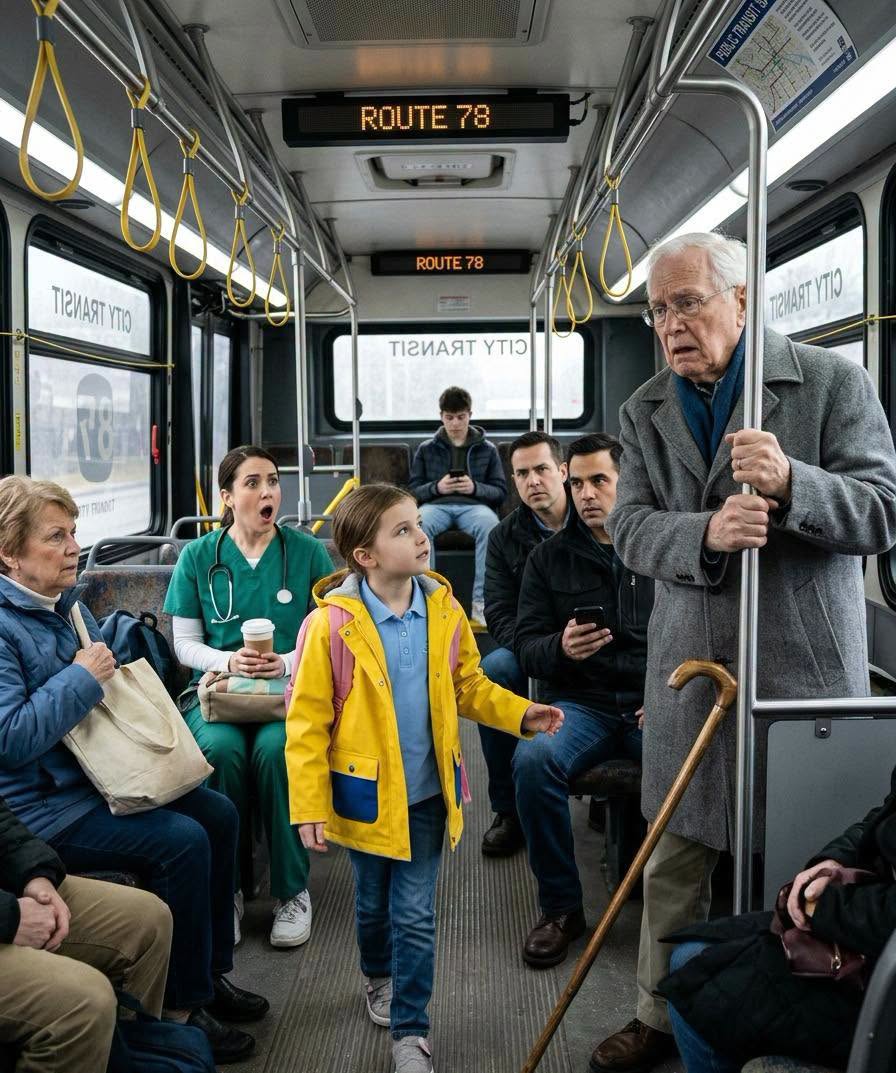
The morning Emily stood up on the city bus, no one realized they were witnessing the beginning of something extraordinary. There were no flashing lights, no breaking news alerts, and no dramatic speeches. Just a quiet little girl wearing a worn yellow coat, clutching a backpack that looked almost too heavy for her small shoulders. She boarded like every other child that morning, blending into the crowd of commuters who were already thinking about work, bills, appointments, and everything waiting for them after sunrise. By the time the sun set, however, one simple decision made by that little girl would quietly change the lives of people she had never even met.
Emily was only nine years old.
She had already learned lessons no child should have to learn.
Her mother, Sarah, worked two jobs just to keep a roof over their heads.
Every morning before school, Emily watched her leave the apartment while it was still dark outside.
Every evening, Sarah returned home exhausted, carrying groceries in one hand and unpaid bills in the other.
They rarely talked about money.
They didn’t need to.
Emily could hear the worry every time another envelope arrived in the mailbox.
She recognized the way her mother’s smile disappeared whenever the word “rent” appeared on a piece of paper.
That particular morning felt different.
Sarah had barely slept.
Another warning notice sat unopened on the kitchen table.
The landlord had threatened eviction again.
Trying not to let Emily notice her fear, Sarah kissed her daughter goodbye and reminded her to be careful on the bus.
Emily nodded.
She always did.
Route 78 followed the same streets every weekday.
The regular passengers recognized one another without ever exchanging names.
There was the elderly man who always carried crossword puzzles.
The nurse finishing her overnight shift.
The college student who never looked up from his textbooks.
The driver greeted everyone with the same tired smile.
It was an ordinary route.
Until that morning.
Several stops after Emily boarded, a young woman climbed onto the bus carrying a toddler on one hip and balancing several folders beneath her arm.
She looked exhausted.
As she searched for a seat, one folder slipped from her grasp.
Documents scattered across the aisle.
People looked.
Then looked away.
Most passengers assumed someone else would help.
Emily didn’t hesitate.
She immediately left her seat.
Carefully gathering the papers one by one, she noticed words printed across the top of several pages.
“Housing Assistance.”
“Emergency Appeal.”
She didn’t fully understand what they meant.
She simply handed everything back with a quiet smile.
The woman looked ready to cry.
“Thank you,” she whispered.
Emily nodded before returning to her seat.
She thought the moment was over.
She couldn’t have known someone else had been watching.
Across the aisle sat a man named Michael.
He worked for the city’s housing department.
That morning, he had boarded the bus carrying several case files he planned to review before work.
One of those files belonged to the same woman Emily had just helped.
Michael recognized the paperwork immediately.
He also recognized something else.
The young mother looked nothing like the careless tenant described in official reports.
She looked frightened.
Overwhelmed.
Trying desperately not to fall apart.
Watching Emily help without expecting anything in return stirred something inside him.
For months, paperwork had become routine.
Applications.
Deadlines.
Approvals.
Denials.
People slowly turned into case numbers.
That morning reminded him they were families.
By the time he reached his office, he reopened the woman’s file.
Instead of automatically approving the eviction recommendation already prepared by another department, he reviewed every document again.
Hidden among the paperwork, he discovered several processing errors.
Important income records had never been included.
Medical documentation had been misplaced.
Her application qualified for emergency protection after all.
One signature changed everything.
The eviction was suspended.
Emergency assistance was approved.
Several weeks later, Sarah received unexpected news.
The landlord’s eviction notice had been withdrawn.
Rental assistance had finally been approved.
For the first time in months, she slept through the night without waking in panic.
Emily noticed the difference almost immediately.
Her mother smiled more often.
Dinner conversations became lighter.
The word “moving” slowly disappeared from their home.
Emily never connected those changes to the morning on the bus.
She simply believed life had become a little kinder.
Meanwhile, Michael found himself approaching every case differently.
Instead of seeing paperwork first, he began imagining the families behind each application.
Children doing homework.
Parents working double shifts.
Grandparents raising grandchildren.
Every signature suddenly carried real consequences.
His work became more careful.
More compassionate.
The elderly man from Route 78 often told friends about the little girl in the yellow coat.
Each time he shared the story, it grew slightly larger.
Some details changed.
Others became more colorful.
But the heart of it remained exactly the same.
A child noticed someone struggling.
Everyone else looked away.
She didn’t.
Years later, none of those people remembered the exact date.
Emily barely remembered the papers she picked up from the bus floor.
Michael never told anyone that one small act of kindness had changed the way he approached his career forever.
Sarah simply remained grateful for the second chance she never expected to receive.
Their lives rarely crossed again.
Yet they remained connected in ways none of them fully understood.
Sometimes we imagine history changing through grand speeches, heroic rescues, or remarkable achievements.
More often, it changes quietly.
One child stands when everyone else remains seated.
One stranger decides to look a little closer.
One signature arrives instead of another.
And somewhere, without fanfare or recognition, an ordinary morning becomes the beginning of a completely different future.
Emily never believed she had done anything extraordinary.
She simply saw someone who needed help.
Sometimes that is enough to become the first crack in a wall that everyone else believed would stand forever.