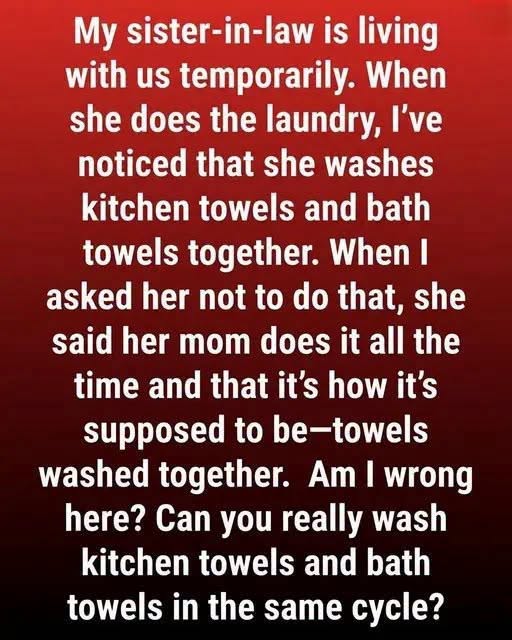
You probably toss all your towels into the washing machine without giving it a second thought. Kitchen towels, bathroom towels, hand towels—it all seems like laundry, so why not wash everything together? It feels convenient, saves time, and appears perfectly harmless. But according to hygiene experts, that simple habit may be spreading far more than clean water throughout your home. Hidden within damp fabrics can be bacteria, food residue, body oils, and other contaminants that survive long enough to transfer from one towel to another if they are not washed properly.
One of the biggest mistakes many households make is treating every towel as if it has the same purpose. In reality, kitchen towels and bathroom towels are exposed to completely different types of germs. A towel used to dry clean hands after a shower is very different from one that has wiped up raw chicken juices, greasy countertops, spilled milk, or dirty dishes. Mixing them together increases the possibility that harmful bacteria could spread throughout the load.
Kitchen towels often come into contact with foodborne bacteria such as Salmonella, Campylobacter, and E. coli. Even if the contamination is invisible, these microorganisms can remain on fabric for hours—or even days—especially when towels stay damp. Every time the towel is reused before washing, those bacteria can continue multiplying, creating an environment that most people never even think about.
Bathroom towels present a different challenge. While they are generally used on clean skin after bathing, they still collect moisture, dead skin cells, natural body oils, and bacteria from the human body. If towels are not allowed to dry completely between uses, they become an ideal breeding ground for mold, mildew, and odor-causing microorganisms. That familiar musty smell is often a sign that bacteria and fungi have already begun multiplying within the fibers.
When kitchen towels carrying food contamination are washed together with bath towels, cross-contamination becomes possible. Although modern washing machines remove a significant amount of dirt and bacteria, not every wash cycle reaches temperatures high enough to eliminate all harmful microorganisms, particularly if cold water or quick cycles are used. The result may be towels that look perfectly clean while still carrying unwanted germs.
Experts recommend washing heavily soiled kitchen towels separately from bath towels whenever possible. Towels used while preparing raw meat, seafood, or poultry deserve extra attention because these foods can harbor dangerous bacteria capable of causing food poisoning. Separating those loads helps reduce the chance of spreading contamination to other household fabrics.
Water temperature also plays an important role. For white cotton kitchen towels that are heavily soiled, a hot wash is generally more effective at removing grease and killing bacteria than cooler settings. Always check the care label first, since some fabrics may require lower temperatures to avoid damage. Using an appropriate laundry detergent further improves cleaning performance by breaking down oils and removing dirt trapped deep within the fibers.
Drying is just as important as washing. Damp towels left inside the washing machine for several hours can quickly begin developing unpleasant odors as bacteria multiply in the warm, moist environment. Whenever possible, transfer towels to the dryer promptly or hang them in a well-ventilated area where they can dry completely before being folded or reused.
Many hygiene specialists also recommend replacing towels that continue smelling sour even after washing. Persistent odors often indicate that bacteria or mildew have become deeply embedded within the fabric, making complete removal increasingly difficult despite repeated washing.
Another simple habit that can improve household hygiene is color-coding towels. Using one color exclusively for the kitchen and another for bathrooms helps everyone in the household avoid accidental mix-ups. It also makes laundry sorting faster and reduces the chances of cross-contamination without adding extra work to your routine.
Regularly disinfecting your washing machine can also make a difference. Soap residue, moisture, and lint gradually build up inside the drum and detergent compartments, creating an environment where bacteria and mold can thrive. Running an occasional cleaning cycle according to the manufacturer’s instructions helps keep the machine itself fresh and working efficiently.
Equally important is allowing towels to dry fully after every use. Hanging them flat instead of leaving them crumpled on the floor or in a laundry basket reduces moisture retention and slows bacterial growth. Good airflow is one of the simplest yet most effective defenses against unpleasant odors and microbial buildup.
While these precautions may sound small, they can significantly improve overall household hygiene. Preventing cross-contamination isn’t about becoming obsessed with germs—it’s about making thoughtful choices that reduce unnecessary health risks using habits that require very little extra effort.
Clean towels should do exactly what we expect them to do: leave us feeling fresh and comfortable. By separating kitchen and bathroom towels, choosing appropriate wash settings, drying them thoroughly, and replacing worn-out fabrics when needed, you can ensure your laundry is truly clean rather than simply looking clean.
The next time you’re loading the washing machine, take an extra moment before throwing every towel into the same cycle. That small decision could make a meaningful difference in keeping harmful bacteria where they belong—out of the fabrics your family uses every single day.““