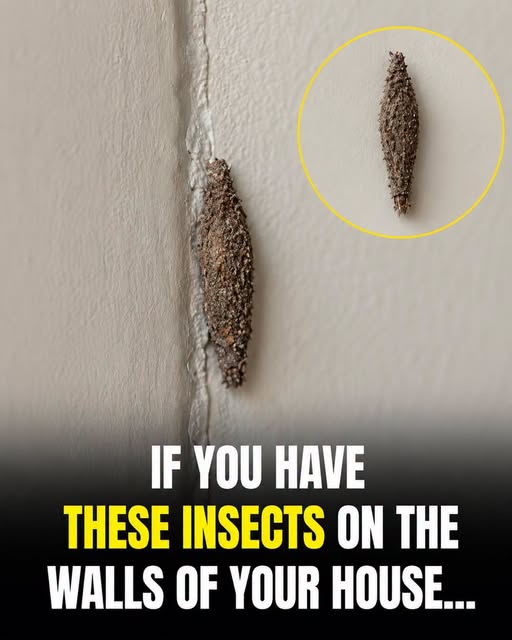
Most of us assume our homes are clean simply because the floors are vacuumed and the visible dust has been wiped away. Yet there are tiny household pests that can quietly settle into overlooked corners for months without attracting much attention. One of these is the case-bearing moth larva, sometimes referred to as a “household bagworm.” Their unusual appearance often surprises homeowners because they disguise themselves with dust, fibers, and debris collected from the very environment they live in.
Unlike the outdoor bagworms that damage trees and shrubs, these indoor case-bearing moth larvae have adapted remarkably well to life inside homes. They construct small portable cases using silk combined with lint, pet hair, carpet fibers, and other tiny particles they gather along the way. The finished case blends so naturally into its surroundings that most people mistake it for an ordinary piece of dust or a bit of lint stuck to the wall.
Their remarkable camouflage is one reason they often go unnoticed. Instead of crawling openly across floors or countertops, they spend much of their time attached to walls, ceilings, closets, or hidden corners where cleaning tools rarely reach. Unless someone looks closely, these tiny cases can remain in place for weeks or even months without raising suspicion.
Bedrooms are among their favorite places to live. Every day, bedding sheds microscopic fibers, clothing releases lint, hair falls naturally, and skin cells accumulate. While these materials are harmless to us, they provide ideal building supplies and, in some cases, food sources for the larvae. Quiet rooms with little disturbance offer the stable environment they need to continue developing.
Closets are another common hiding place, particularly those containing wool, silk, feathers, or other natural materials. If clothing is stored for long periods without being moved or cleaned, the insects may gradually settle in. Their feeding damage is usually minor at first but can become noticeable over time if an infestation is allowed to grow.
The areas most likely to harbor these insects are the places many people rarely inspect. Ceiling corners, baseboards, spaces behind furniture, the backs of closets, storage rooms, garages, and utility areas often provide the combination of dust, darkness, and limited airflow they prefer. Routine cleaning frequently overlooks these hidden locations.
Fortunately, these insects are generally considered more of a nuisance than a serious health threat. They do not bite people, they are not known to spread disease, and they are very different from pests such as bed bugs or cockroaches. Their presence is usually an indication that dust, lint, and moisture have accumulated in certain parts of the home.
One of the simplest ways to reduce their numbers is through thorough cleaning. Vacuuming not only open floors but also baseboards, ceiling edges, closets, and the spaces behind heavy furniture removes both the larvae and the materials they rely on for survival. Using crevice attachments helps reach locations where ordinary vacuuming often misses.
Reducing excess humidity can also make a home less attractive to these insects. Good ventilation, proper airflow, and dehumidifiers in damp areas such as basements or storage rooms create conditions that are less favorable for their development.
Regularly washing blankets, curtains, and stored clothing also helps limit the buildup of fibers that these larvae use to construct their protective cases. Clothes that remain untouched for months should be aired out and inspected occasionally, especially if they are made from natural fibers.
If you discover several case-bearing larvae throughout your home, removing the visible cases is only the first step. A more complete inspection may reveal additional insects hidden in overlooked areas. Continued cleaning over several weeks is usually effective because it interrupts their life cycle before new generations become established.
In situations where large numbers continue to appear despite regular cleaning, consulting a licensed pest-control professional may be worthwhile. They can confirm whether the insects are indeed case-bearing moth larvae or another household pest requiring a different approach.
Many homeowners become alarmed when they first learn about these insects, but there is usually no reason to panic. Their presence does not necessarily mean a home is dirty. Even well-maintained houses can occasionally provide enough lint, fibers, and dust for a few larvae to survive unnoticed.
Instead, think of them as a reminder to pay attention to the areas that often escape routine cleaning. Small improvements in housekeeping, better airflow, and regular inspections of closets and storage spaces can dramatically reduce the likelihood of an ongoing infestation.
The next time you notice what appears to be an odd little piece of lint attached to a wall or ceiling, take a closer look before brushing it aside. It may simply be dust—but it could also be one of nature’s cleverest little camouflage experts quietly making itself at home.
Understanding how these insects live allows homeowners to respond calmly and effectively. With consistent cleaning, good ventilation, and occasional inspections of hidden corners, most households can prevent case-bearing moth larvae from becoming more than a minor and temporary nuisance.