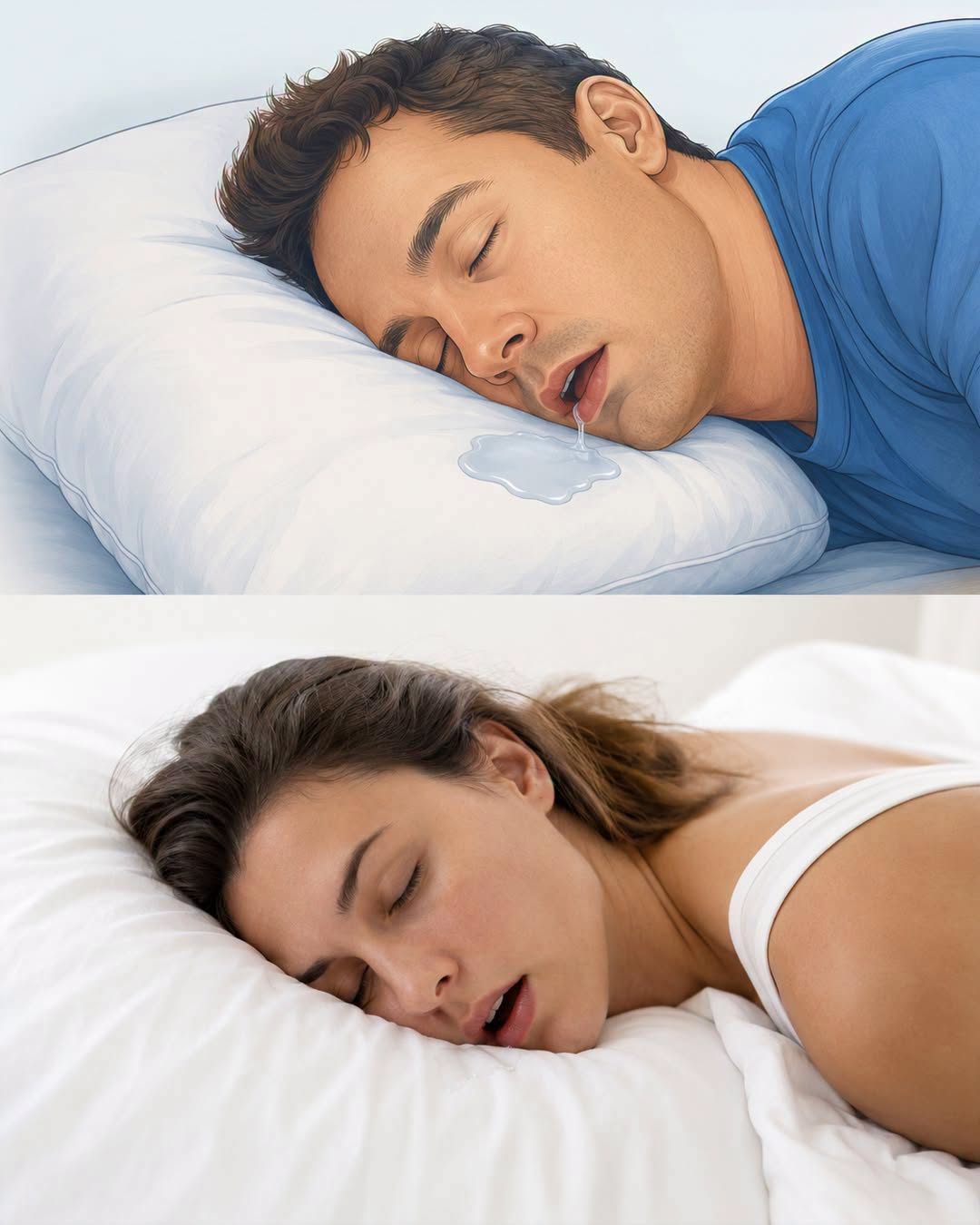
Few things are more surprising than waking up in the middle of the night—or first thing in the morning—and realizing there’s a damp spot on your pillow. For many people, nighttime drooling can feel embarrassing, but it’s actually far more common than most realize. In many cases, it’s simply a natural result of the way the body functions during sleep. However, understanding why it happens can help you recognize when it’s completely normal and when it may be worth discussing with a healthcare professional.
While you sleep, your body enters several different stages of rest, each involving important physical changes. During the deeper phases of sleep, your muscles become increasingly relaxed. This relaxation helps your body recover after a long day, but it also affects the muscles around your jaw and mouth. As these muscles loosen, your mouth may naturally fall open, creating an easier path for saliva to escape.
Saliva production doesn’t stop when you fall asleep. In fact, your salivary glands continue working throughout the night to keep your mouth moist and protect your teeth and oral tissues. The difference is that while you’re asleep, you swallow less frequently than you do during the day. As saliva gradually builds up, some of it may simply flow out of the mouth instead of being swallowed.
Your sleeping position plays one of the biggest roles in whether drooling occurs. People who sleep on their side or stomach are generally more likely to wake up with a wet pillow because gravity naturally pulls saliva toward the corner of the mouth. Those who sleep on their backs often experience less drooling since gravity encourages saliva to remain inside the mouth, where it is more likely to be swallowed.
Breathing habits can also make a noticeable difference. If your nose is blocked because of allergies, a cold, sinus congestion, or structural issues such as a deviated septum, you may begin breathing through your mouth during sleep. Keeping your mouth open for several hours increases the likelihood that saliva will escape onto your pillow.
Seasonal allergies are among the most common contributors to nighttime mouth breathing. Swollen nasal passages make it more difficult to breathe comfortably through the nose, leading many people to unconsciously rely on their mouths throughout the night. Treating the underlying congestion often reduces both mouth breathing and drooling.
Digestive conditions may also play a role for some individuals. Gastroesophageal reflux disease (GERD), commonly known as acid reflux, can sometimes stimulate increased saliva production. This response, often called “water brash,” is the body’s way of helping neutralize stomach acid that reaches the esophagus. If nighttime drooling occurs alongside frequent heartburn, sour-tasting fluid in the mouth, or chronic throat irritation, discussing these symptoms with a healthcare provider may be worthwhile.
Certain medications can contribute as well. Some medicines affect saliva production directly, while others influence swallowing or muscle relaxation during sleep. If excessive drooling begins soon after starting a new prescription, it’s reasonable to ask your doctor or pharmacist whether it could be a side effect.
In some situations, enlarged tonsils or other conditions affecting the throat may interfere with normal swallowing during sleep. Sleep disorders such as obstructive sleep apnea may also contribute by encouraging mouth breathing throughout the night. These conditions deserve medical evaluation because they can affect overall sleep quality and long-term health.
Although drooling is usually harmless, there are situations where it should not be ignored. If excessive drooling develops suddenly, is accompanied by difficulty swallowing, persistent choking, slurred speech, facial weakness, or other neurological symptoms, prompt medical attention is important because these symptoms may indicate a more serious underlying condition.
Fortunately, many simple lifestyle adjustments can reduce nighttime drooling. Sleeping on your back, elevating your head slightly with an appropriate pillow, maintaining good nasal hygiene, and treating allergies or congestion often make a noticeable difference. Staying well hydrated and practicing good oral hygiene can also support overall mouth health.
Creating a comfortable sleep environment may help as well. Using a humidifier during dry seasons can keep airways moist, while avoiding heavy meals immediately before bedtime may reduce reflux symptoms for people who experience acid-related discomfort during the night.
It’s also important to remember that everyone produces different amounts of saliva. Some people naturally have more active salivary glands than others, and occasional drooling does not automatically indicate a health problem. In many cases, it’s simply a normal variation in how the body functions during deep sleep.
Rather than feeling embarrassed by a wet pillow, consider it an opportunity to pay closer attention to your overall sleep habits. Your body often provides subtle clues about how well you’re breathing, sleeping, and recovering overnight. Understanding those signals can help you make small changes that improve both comfort and health.
If nighttime drooling becomes persistent, excessive, or begins interfering with your sleep or daily life, consulting a healthcare professional can help identify the underlying cause and determine whether treatment is necessary. Early evaluation is especially valuable when new symptoms appear alongside changes in swallowing, breathing, or neurological function.
In the end, waking up with a little saliva on your pillow is usually nothing to worry about. More often than not, it’s simply the result of relaxed muscles, gravity, and the normal biology of sleep. Still, paying attention to changes in your body—and seeking advice when something doesn’t seem right—is one of the best ways to protect your long-term health and enjoy more restful nights.