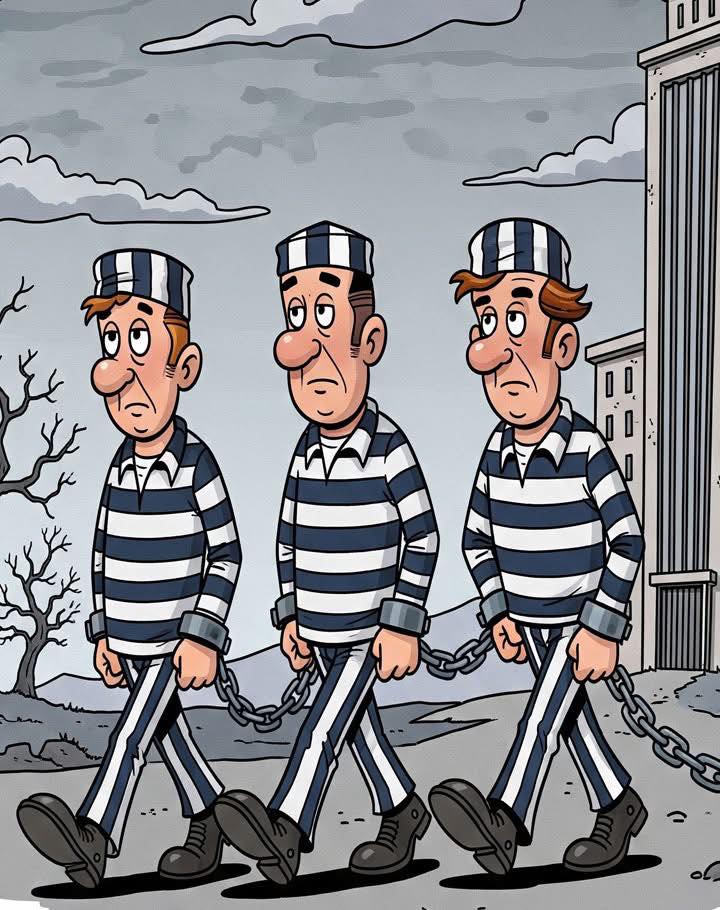
The bus was dead quiet at first, the kind of silence that presses against your ears and makes every small movement feel louder than it is. Chains rattled softly with each bump in the road, and the guards sat stiffly, eyes forward, as if even they didn’t want to disturb the heavy atmosphere hanging in the air. No one spoke—until the first convict broke the tension with a smug grin and a loud, careless boast.
He started talking about how he’d outsmarted people on the outside, spinning his story with exaggerated confidence, clearly enjoying the attention. A few heads turned. Someone snorted. The silence cracked just enough to let something human slip through. By the time the second man joined in, adding his own ridiculous claims and half-believable tales, the mood had shifted. What had been a suffocating ride began to feel almost… alive.
Then the third man slowly opened his bag. He didn’t rush, didn’t try to compete with their loud voices. Instead, he let curiosity build. When he finally revealed what he had brought, the guards exchanged glances, biting their lips, trying hard not to laugh. Even the prisoners leaned in, confused at first—then amused. It was so unexpected, so absurd, that for a brief moment, the bus no longer felt like a transport to confinement. It felt like a stage for something oddly freeing.
But none of that compared to what happened later that night.
When they were locked in, the walls seemed to close in again. The dim lights buzzed overhead, casting long shadows across the cell block. The earlier laughter had faded into memory, replaced by the cold reality of iron bars and long sentences. Then, out of the darkness, a voice rang out—clear, confident, almost playful: “Twenty-nine!”
What followed was something no one could have predicted. Hardened criminals—men who had built their identities on toughness, on silence, on surviving—suddenly burst into laughter. Not just quiet chuckles, but full, uncontrollable laughter that echoed through the halls. Some doubled over, others wiped tears from their eyes. It was as if that single number had unlocked something buried deep inside them.
Three men on their way to prison had tried to outsmart boredom with the only thing they were allowed to bring. One had clung tightly to a worn deck of cards, imagining endless games that could stretch time and distract the mind from the weight of his situation. Another had packed simple painting supplies, holding onto the fragile hope that he could reinvent himself, even behind bars—maybe become someone remembered for something other than his crime.
And then there was the third man. Calm, almost detached, he revealed a box of tampons—not for what they were meant for, but for the bold, almost ridiculous promises printed on the packaging: freedom, movement, adventure. Words that had no place in a prison, yet somehow carried a strange kind of comfort. His choice wasn’t practical in the usual sense, but it carried humor, irony, and a quiet rebellion against the reality they were heading into. On that bleak bus, his joke didn’t just make people laugh—it briefly opened a window to a world far beyond steel bars and razor wire.
Later, in the dim, restless quiet of the cell block, humor revealed itself as something deeper than entertainment. It became a language—one that didn’t need long explanations or elaborate setups. The older inmates had told the same jokes so many times that they had reduced them to simple numbers. Each number carried a full story, a punchline, a shared memory. Saying “twelve” or “eighteen” was enough to trigger laughter, because everyone already knew what it meant.
It was efficient, almost mechanical—but also strangely comforting. It meant there was history there, a shared culture, something that belonged to them.
So when the new inmate shouted “twenty-nine,” he didn’t realize what he was stepping into. He thought he was playing along, guessing, trying to fit in. But instead, he did something unexpected—he created something new.
And that’s why the laughter hit so hard.
It wasn’t just about the joke itself. It was about the surprise, the break in routine, the reminder that even in a place where everything feels predictable and controlled, something original can still exist. Something can still catch people off guard.
In that moment, behind locked doors and under watchful eyes, the prisoners weren’t just inmates anymore. They were people sharing something real—something alive. And for a brief, powerful instant, laughter gave them what the world outside had taken away: a sense of freedom.The bus was dead quiet at first, the kind of silence that presses against your ears and makes every small movement feel louder than it is. Chains rattled softly with each bump in the road, and the guards sat stiffly, eyes forward, as if even they didn’t want to disturb the heavy atmosphere hanging in the air. No one spoke—until the first convict broke the tension with a smug grin and a loud, careless boast.
He started talking about how he’d outsmarted people on the outside, spinning his story with exaggerated confidence, clearly enjoying the attention. A few heads turned. Someone snorted. The silence cracked just enough to let something human slip through. By the time the second man joined in, adding his own ridiculous claims and half-believable tales, the mood had shifted. What had been a suffocating ride began to feel almost… alive.
Then the third man slowly opened his bag. He didn’t rush, didn’t try to compete with their loud voices. Instead, he let curiosity build. When he finally revealed what he had brought, the guards exchanged glances, biting their lips, trying hard not to laugh. Even the prisoners leaned in, confused at first—then amused. It was so unexpected, so absurd, that for a brief moment, the bus no longer felt like a transport to confinement. It felt like a stage for something oddly freeing.
But none of that compared to what happened later that night.
When they were locked in, the walls seemed to close in again. The dim lights buzzed overhead, casting long shadows across the cell block. The earlier laughter had faded into memory, replaced by the cold reality of iron bars and long sentences. Then, out of the darkness, a voice rang out—clear, confident, almost playful: “Twenty-nine!”
What followed was something no one could have predicted. Hardened criminals—men who had built their identities on toughness, on silence, on surviving—suddenly burst into laughter. Not just quiet chuckles, but full, uncontrollable laughter that echoed through the halls. Some doubled over, others wiped tears from their eyes. It was as if that single number had unlocked something buried deep inside them.
Three men on their way to prison had tried to outsmart boredom with the only thing they were allowed to bring. One had clung tightly to a worn deck of cards, imagining endless games that could stretch time and distract the mind from the weight of his situation. Another had packed simple painting supplies, holding onto the fragile hope that he could reinvent himself, even behind bars—maybe become someone remembered for something other than his crime.
And then there was the third man. Calm, almost detached, he revealed a box of tampons—not for what they were meant for, but for the bold, almost ridiculous promises printed on the packaging: freedom, movement, adventure. Words that had no place in a prison, yet somehow carried a strange kind of comfort. His choice wasn’t practical in the usual sense, but it carried humor, irony, and a quiet rebellion against the reality they were heading into. On that bleak bus, his joke didn’t just make people laugh—it briefly opened a window to a world far beyond steel bars and razor wire.
Later, in the dim, restless quiet of the cell block, humor revealed itself as something deeper than entertainment. It became a language—one that didn’t need long explanations or elaborate setups. The older inmates had told the same jokes so many times that they had reduced them to simple numbers. Each number carried a full story, a punchline, a shared memory. Saying “twelve” or “eighteen” was enough to trigger laughter, because everyone already knew what it meant.
It was efficient, almost mechanical—but also strangely comforting. It meant there was history there, a shared culture, something that belonged to them.
So when the new inmate shouted “twenty-nine,” he didn’t realize what he was stepping into. He thought he was playing along, guessing, trying to fit in. But instead, he did something unexpected—he created something new.
And that’s why the laughter hit so hard.
It wasn’t just about the joke itself. It was about the surprise, the break in routine, the reminder that even in a place where everything feels predictable and controlled, something original can still exist. Something can still catch people off guard.
In that moment, behind locked doors and under watchful eyes, the prisoners weren’t just inmates anymore. They were people sharing something real—something alive. And for a brief, powerful instant, laughter gave them what the world outside had taken away: a sense of freedom.