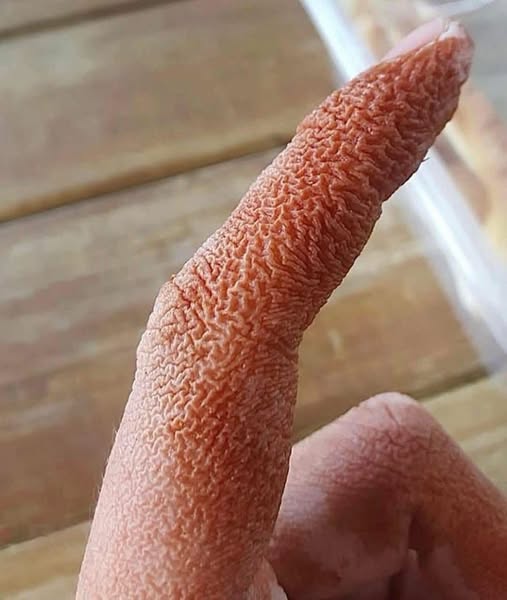
What began as a few small red spots on my face quickly turned into one of the most frightening experiences of my life. Within just a few hours, the irritation became an intense burning sensation that spread across my skin, making even the slightest touch feel unbearable. Cold compresses brought no relief, pain medication barely helped, and every glance in the mirror revealed lesions that seemed to worsen by the hour. My family watched helplessly as doctors searched for answers, while I struggled to understand how my body had transformed so dramatically in such a short period of time. What I initially dismissed as a simple allergic reaction soon became the beginning of a medical journey involving a rare inflammatory disorder that few people have ever heard of.
Everything started on what seemed like a completely ordinary afternoon. Without warning, painful, bright red patches appeared across my face and neck. At first they resembled a rash, but they quickly became swollen, tender, and unusually warm. The speed of the progression alarmed both me and my primary care physician, who immediately referred me to a dermatologist. After a thorough examination, specialists suspected that my symptoms could be related to an unusual inflammatory reaction, possibly triggered by medication I had recently started taking. As a precaution, every nonessential medication was discontinued while doctors began searching for the true cause.
The following days became an exhausting cycle of hospital visits, blood tests, and uncertainty. My medical team ordered extensive laboratory work, including complete blood counts, autoimmune testing, specialized antibody panels, and a skin biopsy to rule out other serious diseases. Waiting for results was emotionally draining because every possibility seemed to point toward another frightening diagnosis. Although the cause remained uncertain, my doctors decided not to wait. They started me on high-dose oral corticosteroids, hoping to slow the aggressive inflammation before it spread further.
Fortunately, the treatment began working surprisingly quickly. Within two days, the constant burning sensation started to ease, and for the first time in nearly a week I was finally able to sleep through the night. The raised lesions gradually became less inflamed, and the intense redness slowly faded. While the improvement brought enormous relief, my doctors continued searching for an explanation because understanding the underlying condition would determine how my recovery would be managed moving forward.
When the laboratory reports finally arrived, they revealed an unusually high white blood cell count, particularly involving neutrophils, a specific type of immune cell responsible for fighting infection. Some autoimmune markers were positive, while many routine blood tests remained completely normal. The definitive answer came only after the pathology report from my skin biopsy was completed. The diagnosis was acute febrile neutrophilic dermatosis, more commonly known as Sweet syndrome.
Despite its gentle-sounding name, Sweet syndrome is anything but mild. It is a rare inflammatory disease characterized by the sudden appearance of painful red plaques or nodules caused by large numbers of neutrophils accumulating within the skin. Researchers still do not fully understand why the immune system suddenly behaves this way, but current evidence suggests that abnormal immune signaling causes white blood cells to attack healthy tissue, producing severe inflammation rather than protecting the body as they normally would.
Doctors explained that Sweet syndrome can develop for several different reasons. In some patients it follows bacterial or viral infections. In others it is associated with autoimmune diseases or certain types of cancer. A significant number of cases, however, appear to be triggered by medications. Commonly implicated drugs include certain antibiotics, medications used to treat seizures, blood pressure medicines, hormonal therapies, colony-stimulating factors, and occasionally even vaccines. Identifying and removing the trigger becomes one of the most important parts of treatment.
Learning that medication itself might have caused my condition was difficult to accept. Like many patients, I had trusted that every prescription intended to help me would only improve my health. Instead, I discovered that the immune system can sometimes react in completely unexpected ways. My doctors reassured me that although drug-induced Sweet syndrome is rare, early recognition and prompt treatment usually result in an excellent recovery.
One of the greatest challenges surrounding Sweet syndrome is diagnosis. Its symptoms closely resemble many other skin disorders, including allergic reactions, hives, contact dermatitis, toxic drug eruptions, cellulitis, vasculitis, and even cutaneous lupus. Because so many diseases can produce similar-looking rashes, physicians must carefully compare the patient’s symptoms, laboratory findings, biopsy results, and overall medical history before confirming the diagnosis. Without that careful evaluation, the condition can easily be mistaken for something far more common.
Throughout my recovery, I gained a completely new appreciation for the skin. Before this experience, I viewed it simply as the body’s outer covering. I never realized how closely it reflects what’s happening internally. The skin often becomes the first visible sign that the immune system, blood cells, or internal organs are under stress. In my case, those painful red lesions weren’t merely a skin problem—they were the immune system desperately signaling that something much deeper was happening.
Looking back, I realize how fortunate I was to seek medical attention quickly. Had I ignored the rash or attempted to treat it at home, the inflammation could have continued worsening, increasing the risk of more widespread complications and permanent scarring. Early diagnosis, specialized dermatologic care, and appropriate corticosteroid treatment likely prevented a much more serious outcome.
Today, I continue regular medical follow-up and remain aware of medications that could potentially trigger another episode. Although the memory of those painful days still lingers, it has been replaced by gratitude—for the doctors who refused to stop searching for answers, for modern medicine, and for a body resilient enough to recover from such an overwhelming inflammatory attack. Sweet syndrome may be rare and frightening, but with proper recognition and timely treatment, it is a condition that can be successfully managed. My experience taught me never to ignore unusual changes in my body and reminded me that sometimes the smallest warning signs deserve the greatest attention.