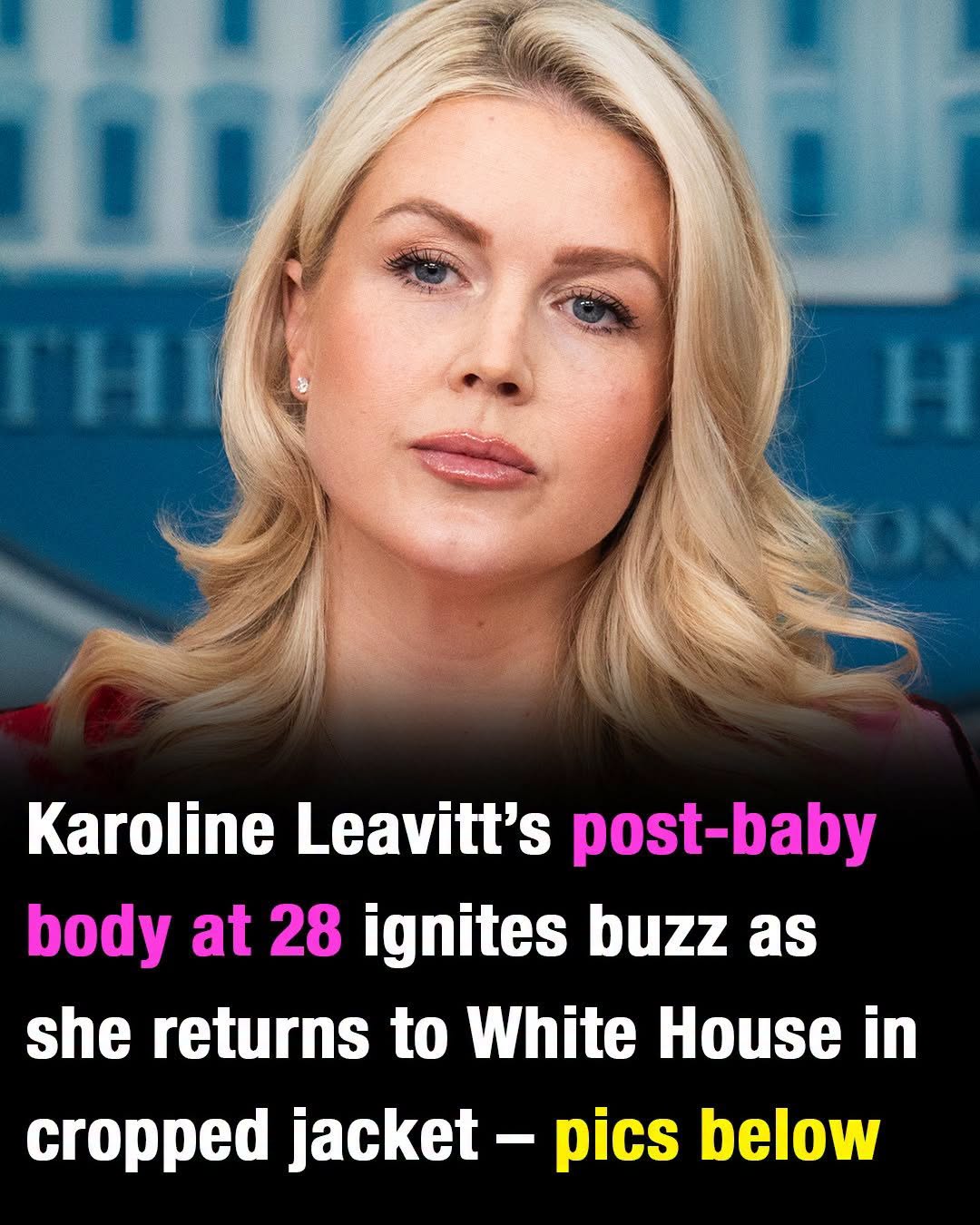
Only eight weeks after welcoming her baby, Karoline Leavitt returned to one of the most demanding jobs in American politics, and her appearance immediately became a major topic of conversation online. As she stepped off Air Force One during an official visit, cameras captured every moment, while social media quickly filled with reactions from supporters and critics alike. Many people focused not on the political event itself, but on how composed, energetic, and confident she appeared so soon after giving birth. The images sparked widespread discussion about whether her rapid return reflected extraordinary determination, immense personal pressure, or the often unseen expectations placed on women balancing family life and high-profile careers.
When Leavitt appeared in Reading, Pennsylvania, she was returning not only to public service but also to life in the national spotlight. Only weeks earlier, the 28-year-old White House press secretary had quietly stepped away from her duties to welcome her daughter, Viviana “Vivi” Riccio, and begin adjusting to life as a mother of two alongside her husband, Nicholas. Dressed in a tailored blazer, dark trousers, and wearing a relaxed smile, she projected confidence that surprised many observers, appearing remarkably composed for someone navigating the physical and emotional demands of new motherhood.
The public response was unusually positive across social media. Thousands of comments praised her professionalism, confidence, and apparent ability to resume such an intense schedule in a remarkably short period of time. Admirers described her as poised and resilient, while many expressed amazement at what they viewed as an impressive recovery. Yet behind those polished photographs lies a reality familiar to millions of working mothers—one filled with sleepless nights, constant responsibilities, physical recovery, and the emotional challenge of balancing career ambitions with family life.
Ultimately, Leavitt’s return became about far more than clothing, appearance, or political headlines. It reignited an important conversation about the expectations society places on women after childbirth, particularly those working in demanding public roles. While many celebrated her strength and dedication, others saw the moment as a reminder that every mother’s journey is different, and no single timeline defines recovery or success. Beneath the photographs and public admiration remains a broader message: behind every seemingly effortless comeback is often an enormous amount of unseen sacrifice, resilience, and determination that the cameras never fully capture.