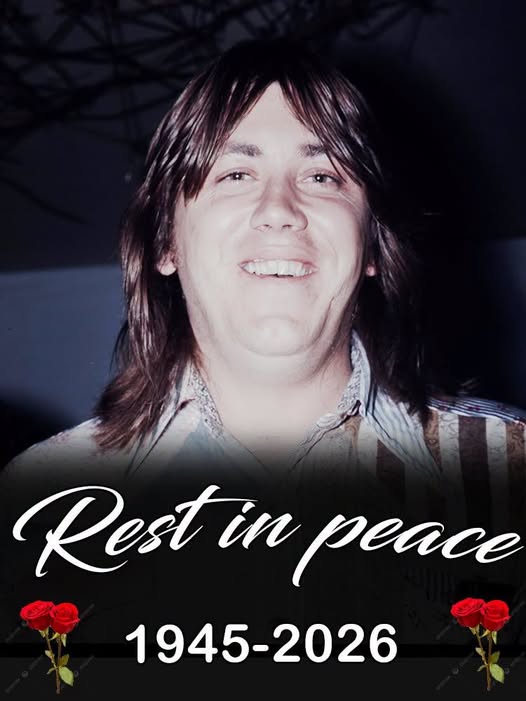
A music giant slipped away while the world wasn’t looking. Walter Parazaider, the quiet architect behind Chicago’s soaring horn sound, is gone at 81 after a long and painful six-year battle with Alzheimer’s. The news arrived softly but landed heavily among fans who grew up with the unmistakable sound he helped create. In a moment of loss that felt both personal and historical, his family’s words carried the weight of a life deeply loved and slowly taken by illness. His daughter’s final message to her “poppy, my Pal” left fans shaken, while his wife of 59 years held tightly to memories of a lifetime spent together, refusing to let those moments fade into silence.
Walter Parazaider’s story was never simply about fame or recognition; it was about imagination, persistence, and a musical vision that reshaped the identity of rock music. A young man from Maywood, Illinois, he dared to believe that horns did not belong only in jazz clubs or orchestras but could stand proudly at the center of a rock band. That idea, unusual at the time, would go on to define one of the most distinctive sounds in modern music history. Alongside his bandmates, he helped form Chicago, a group that blended rock energy with rich brass arrangements, creating something entirely new and instantly recognizable.
From the opening notes of “Color My World” to the emotional depth of “Just You ’n’ Me,” Parazaider’s contributions were never just background detail. His saxophone, clarinet, and flute became essential voices within the band’s identity. Rather than simply decorating the music, they shaped its emotional core, giving Chicago’s songs a warmth, complexity, and soul that set them apart from nearly every other group of their era. Millions of listeners, often without realizing it, grew attached to melodies carried through his instruments.
Yet behind the global success and sold-out performances was a deeply personal life defined by loyalty and devotion. He was a husband of 59 years, a father affectionately called “my hero,” and a man who remained grounded despite the scale of his influence. Those closest to him often described him not first as a rock legend, but as a steady, kind presence whose greatest pride was his family. As Alzheimer’s gradually took hold, it began to strip away pieces of the man the world knew, even as his music continued to inspire new generations.
The illness was slow and unrelenting, a quiet contrast to the powerful sound he helped bring into the world. Over six years, his family witnessed a painful transformation, watching memories fade while his legacy grew ever larger in the public eye. Through it all, his wife remained by his side, holding onto nearly six decades of shared life, history, and love. Their bond became a reminder that behind every public figure is a private world of connection that no illness can fully erase.
His bandmates have often spoken about Parazaider not only as a musician but as a foundational force within Chicago. He was one of the original visionaries who helped shape the group’s identity, pushing for the integration of horns at a time when the idea was far from mainstream in rock music. Without his determination and creative instinct, the band’s signature sound might never have existed in the form the world came to know.
As news of his passing spread, tributes began to surface from across the music world. Fans shared memories of concerts, vinyl records, and songs that had become part of their personal histories. Musicians reflected on his influence, acknowledging how his approach to blending classical training with rock structure opened doors for countless artists who followed.
Today, the stages are quieter, but the sound he helped build continues to rise every time a Chicago song plays. The horns that once felt revolutionary now feel timeless, carrying his vision forward long after his final performance. In every soaring melody and every familiar arrangement, Walter Parazaider’s presence remains unmistakable.
Though Alzheimer’s slowly took him from the world, it never erased what he created. His legacy lives not only in recordings but in the emotional imprint those recordings left behind. For fans, his music is more than nostalgia—it is a living reminder of innovation, collaboration, and the power of a single idea to change the course of a genre.
In the end, Walter Parazaider leaves behind more than songs. He leaves behind a sound that helped define an era, a family that loved him deeply, and a musical identity that will continue to resonate for generations. And every time those horns rise again, so too does the quiet architect behind them—still speaking through the music, even in silence.