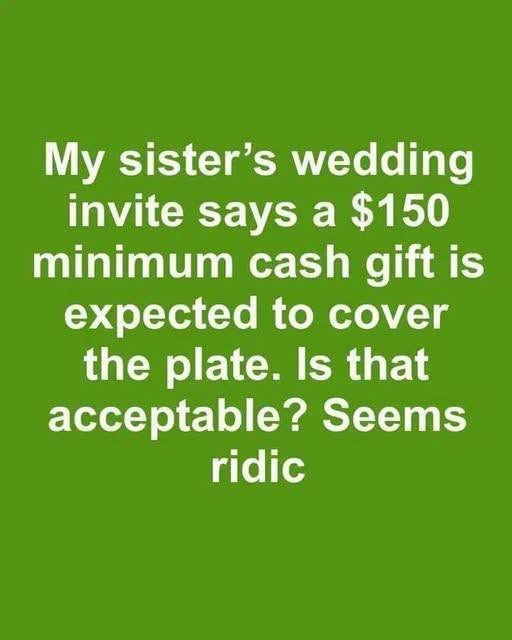
The backlash was instant. One wedding invitation, one controversial line requesting a “minimum $150 cash gift,” and suddenly a private celebration became a public debate. Social media erupted with opinions from every direction. Some people defended the request as practical and realistic, while others condemned it as inappropriate and entitled. Families found themselves arguing over dinner tables. Friends debated the issue in group chats. Strangers shared stories of similar experiences, turning a single invitation into a larger conversation about modern wedding culture. At the center of the controversy was a simple but emotionally charged question: has attending a wedding become a financial obligation rather than a celebration of love?
For many couples, discussing money openly no longer feels unusual. Weddings have become increasingly expensive, with venue costs, catering, photography, entertainment, decorations, and countless other expenses adding up quickly. Even modest celebrations can require significant financial sacrifices. In that reality, some couples view cash gifts not as an optional bonus but as a practical way to help offset the enormous costs associated with bringing together family and friends for a memorable occasion.
Supporters of the invitation argued that honesty is preferable to unspoken expectations. They point out that cash gifts have already become common in many cultures and social circles, often replacing traditional household gifts that newlyweds may not need. Rather than receiving multiple kitchen appliances or duplicate household items, many couples prefer contributions that can help them pay wedding expenses, purchase a home, or begin their married life with greater financial stability.
From this perspective, requesting cash can be viewed as transparency rather than greed. Some couples feel that guests already understand gift-giving is part of wedding etiquette, and specifying a preference simply removes uncertainty. They argue that weddings are shared experiences involving significant planning and expense, and that contributions from guests help make those celebrations possible.
Others go even further, suggesting that when guests enjoy a carefully organized event complete with food, drinks, entertainment, and hospitality, it is not unreasonable for hosts to hope for some level of financial support in return. For couples who have stretched their budgets to include as many loved ones as possible, a cash gift can feel less like a transaction and more like a collective contribution toward a meaningful milestone.
Yet critics see the issue very differently. For them, placing a minimum dollar amount on an invitation crosses an uncomfortable line. What might have been intended as a practical request can easily be interpreted as a demand. Instead of feeling welcomed, some guests may feel evaluated. The focus shifts from celebrating a relationship to calculating a financial obligation, transforming what should be a joyful occasion into a source of stress.
Many people argue that gifts should always remain voluntary expressions of generosity. The moment a specific amount is attached, they contend, the spirit of gift-giving changes. Guests may begin to wonder whether their presence is valued for who they are or for what they can contribute financially. Even if that is not the couple’s intention, perception often matters as much as reality.
Financial circumstances also vary dramatically from person to person. While $150 may seem manageable for some guests, it may represent a significant burden for others. Students, young families, retirees, and individuals facing financial challenges may struggle to contribute that amount without hardship. Yet social pressure often discourages people from admitting financial difficulties, leaving them feeling embarrassed or excluded.
For these guests, the invitation can feel less like an invitation and more like an invoice. Rather than looking forward to the celebration, they may worry about whether they can afford to attend. Some may even decline invitations they would otherwise happily accept, simply to avoid the discomfort of failing to meet an implied expectation.
The debate also reflects broader changes in how society views weddings. Over time, celebrations have evolved from relatively simple family gatherings into elaborate events that sometimes rival major productions. Social media has amplified expectations, encouraging couples to create memorable experiences while simultaneously increasing financial pressures. As costs rise, conversations about who should bear those costs become increasingly common.
Despite the strong opinions on both sides, many people believe the healthiest approach lies somewhere in the middle. Couples have every right to communicate their preferences and make practical decisions about gifts. At the same time, guests should never feel that their attendance is conditional upon a financial contribution. Respect and understanding remain essential regardless of personal views on wedding etiquette.
Many etiquette experts emphasize that gratitude should always take precedence over expectations. A gift, whether large or small, monetary or otherwise, should be appreciated because it represents thoughtfulness and support. Likewise, guests should feel free to contribute according to their circumstances without fear of judgment or comparison.
Ultimately, weddings are meant to celebrate relationships, not transactions. The most meaningful memories rarely revolve around gift amounts or financial contributions. They come from shared laughter, heartfelt conversations, emotional vows, and the presence of loved ones gathered together to mark an important life event.
When couples plan within their means, communicate respectfully, and focus on the people rather than the presents, celebrations tend to feel more welcoming and authentic. Likewise, when guests give what they can—whether financially, emotionally, or simply through their presence—the spirit of generosity remains intact.
In the end, the controversy surrounding a single wedding invitation highlights a larger truth. Money may be an unavoidable part of modern weddings, but it should never overshadow the purpose of the day itself. When both hosts and guests approach the occasion with empathy, appreciation, and mutual respect, the celebration becomes something far more valuable than any dollar amount. It becomes exactly what a wedding is meant to be: a gathering of people united by love, support, and the joy of sharing an important moment together.