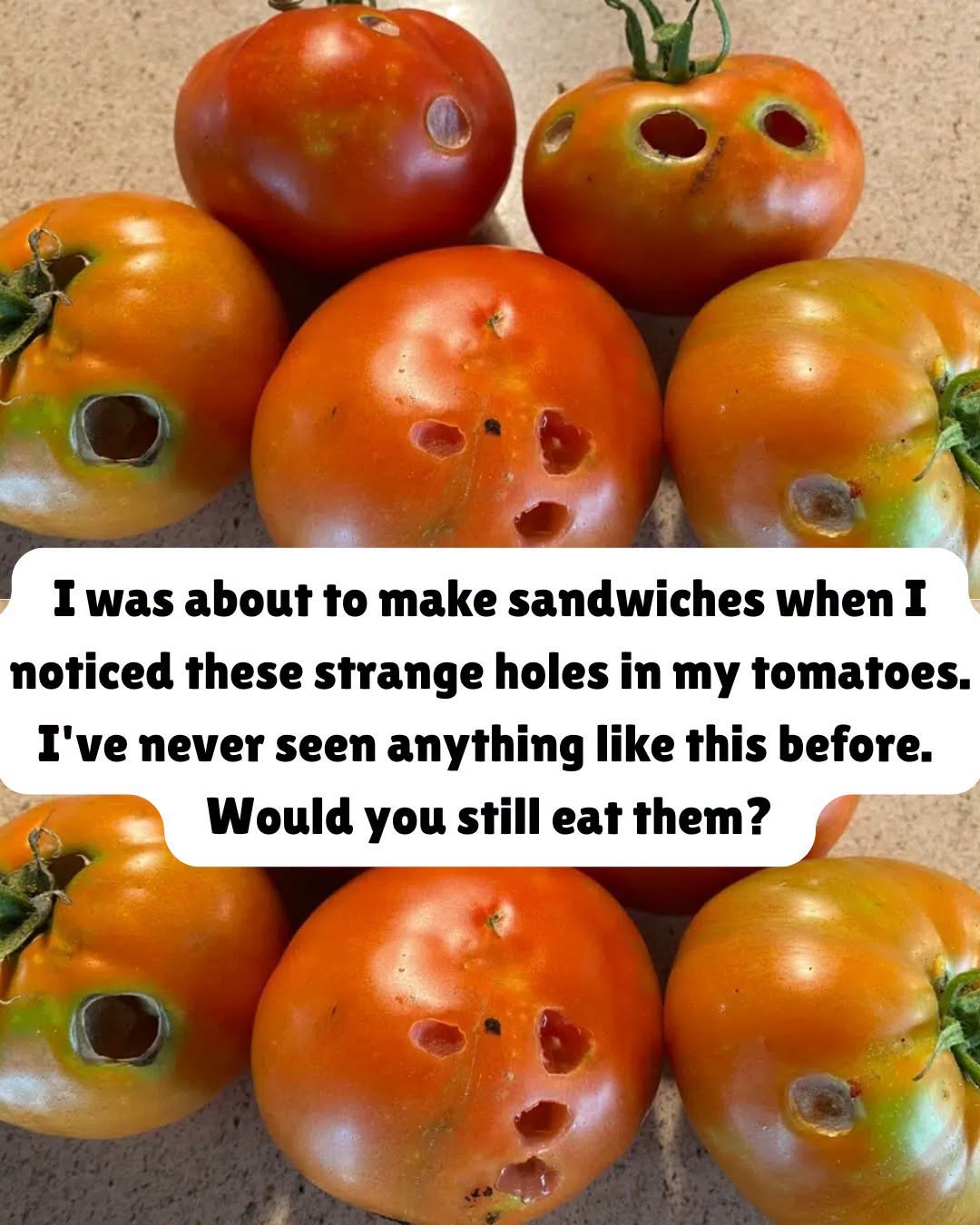
You walk into your garden expecting to admire the fruits of your hard work.
Then you see it.
A beautiful, ripe tomato with a small hole punched right through the skin.
Your stomach sinks immediately.
What caused it?
Is something living inside?
Can the tomato still be eaten?
And perhaps the most worrying question of all—will the rest of the garden be next?
Many gardeners throw the tomato away without a second thought.
But that tiny hole is often more than simple damage.
It is a clue.
A warning sign that something is happening in your garden.
The first suspects are usually insects.
Tomato hornworms, caterpillars, beetles, and other pests can chew through the skin and leave behind small entry points.
Sometimes they remain inside the fruit.
Other times they move on after feeding.
A careful inspection often reveals additional evidence.
Tiny chew marks.
Dark droppings known as frass.
Soft spots.
Or tunnels hidden beneath the surface.
Birds can also be responsible.
A curious peck from a bird may create a small hole that looks surprisingly similar to insect damage.
Squirrels are another common culprit.
They often take only a few bites before abandoning the fruit and moving on to another.
Not every hole is caused by an animal.
Environmental stress can also play a role.
Rapid changes in watering, extreme temperatures, and irregular growth sometimes create cracks or openings that later attract insects and disease.
Conditions like catfacing can leave tomatoes misshapen and vulnerable.
Once an opening appears, fungi and bacteria may enter and begin causing rot.
That is why early inspection is so important.
If the damaged area is small and the rest of the tomato remains firm and healthy, gardeners often remove the affected portion and use the remaining fruit.
However, if mold, foul odors, sliminess, or extensive internal damage are present, disposal is the safest choice.
The good news is that prevention is possible.
Protective garden netting can discourage birds and squirrels from treating your tomatoes like a buffet.
Regular inspections help catch insect problems before they spread.
Companion plants such as basil, marigolds, and certain herbs may help deter some common pests.
Consistent watering is equally important.
Healthy plants are better able to resist stress and recover from minor damage.
Cleaning up fallen fruit and garden debris also reduces places where pests can breed and hide.
Many experienced gardeners eventually learn that every damaged tomato tells a story.
The challenge is learning how to read the signs.
A single hole does not mean your garden is failing.
In fact, it often provides valuable information about what needs attention.
Gardening has always been part science and part detective work.
Every leaf, flower, and fruit offers clues about the health of the plants around it.
The gardeners who pay attention usually discover problems before they become disasters.
So the next time you find a mysterious hole in a tomato, don’t panic.
Take a closer look.
Your garden may be trying to tell you something important.
And once you understand the message, you can protect your harvest and enjoy many more healthy tomatoes in the seasons ahead.