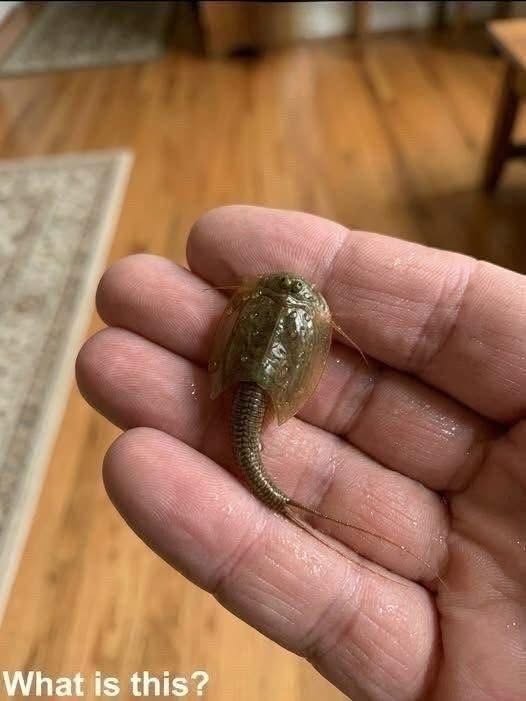
After a powerful rainstorm swept through the area, I went outside to check the drainage ditch running along the edge of my property. The heavy rainfall had turned it into a shallow pool of muddy water filled with leaves, dirt, and bits of debris carried by the current. At first glance, it seemed like nothing more than ordinary storm runoff slowly settling back into the ground. But after standing there for a few moments, I noticed something unusual moving beneath the surface—small, quick, and surprisingly coordinated.
Curiosity quickly got the better of me. I carefully collected a sample of the water in a glass jar and brought it inside for a closer look. Under the bright kitchen light, I could finally see the strange creature more clearly. It had a rounded body and several tiny legs moving rapidly in different directions. Its appearance was so unusual that I immediately wondered whether it might be something rare, invasive, or even dangerous.
Rather than jumping to conclusions, I decided to do some research and compare what I was seeing with reliable sources. After a bit of investigation, I discovered that the creature was a Triops, a small freshwater crustacean that often appears in temporary pools created after heavy rains. Despite its prehistoric and unusual appearance, it is completely harmless and has existed in a similar form for millions of years. What seemed strange and alarming at first was actually a fascinating example of how certain species have adapted to survive in changing environments.
Once I understood what I was looking at, my perspective changed entirely. The uncertainty I initially felt was replaced by admiration for the resilience and diversity of nature. What began as a puzzling discovery in a muddy ditch became an unexpected lesson about the hidden life that can emerge after a storm. Sometimes the things that appear unusual or unfamiliar are not threats at all—they are simply remarkable pieces of the natural world waiting to be understood.