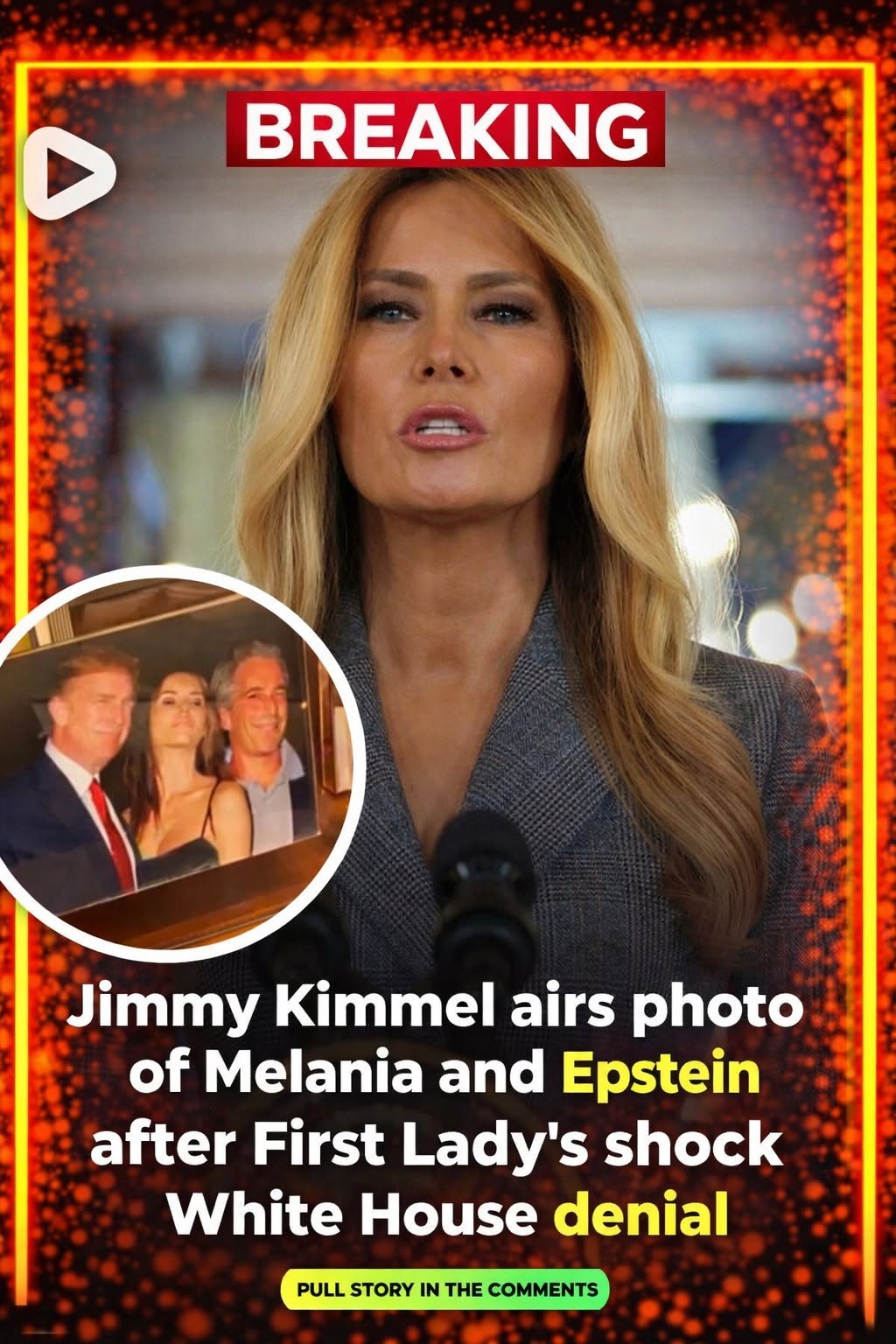
The controversy surrounding Melania Trump’s statement highlights a broader reality about modern public life: perception often moves faster than facts.
In an era where decades-old photographs can resurface within seconds and social media can amplify speculation to millions overnight, public figures rarely control the narrative for long. Every denial is scrutinized. Every association is revisited. Every image becomes a piece of evidence in a much larger cultural debate.
For supporters of the First Lady, her statement represented a straightforward attempt to correct what they view as years of unfair insinuations. They argue that appearing in the same social circles as Jeffrey Epstein during the 1990s and early 2000s does not automatically imply friendship, involvement, or knowledge of his criminal conduct. New York and Palm Beach society were relatively interconnected worlds where celebrities, business figures, politicians, and wealthy socialites frequently crossed paths.
Critics, however, see the issue differently.
They contend that public trust is not built solely on legal distinctions. It is built on transparency, consistency, and credibility. For many observers, photographs and documented encounters raise questions that simple denials cannot fully extinguish. Whether those questions are fair or unfair often depends on the political perspective of the person asking them.
That is precisely why the Kimmel segment gained so much traction.
Late-night television has evolved beyond entertainment into a powerful force capable of shaping public perception. A single joke can travel farther than an official press release. A single image shown during a monologue can become the defining symbol of an entire news cycle.
In this case, the photograph served as more than a visual.
It became a narrative shortcut.
To supporters, it merely documented a moment in a crowded social environment. To critics, it represented proximity to a figure whose name has become synonymous with scandal and abuse.
The same image produced two entirely different interpretations.
Meanwhile, Donald Trump’s reported acknowledgment that he had not been informed about the statement before its release added another layer to the story. Political commentators immediately began debating whether the revelation reflected strategic independence, internal miscommunication, or simply an ordinary disagreement being magnified by public scrutiny.
Regardless of the explanation, it provided fuel for a media environment that thrives on conflict and contradiction.
Every detail became part of the larger spectacle.
Every reaction generated another headline.
Every headline generated another debate.
As the discussion continues, one reality remains unavoidable: the Epstein story has become a uniquely persistent force in American public life. Years after his death, his connections, relationships, and social network continue to draw attention whenever new information emerges or old images resurface.
The reason is simple.
People are not merely interested in who knew Epstein.
They are interested in what those relationships reveal about power, influence, and accountability among society’s most prominent figures.
For public figures caught in that orbit, even tangentially, complete separation from the story is extraordinarily difficult.
The digital age does not forget.
Photographs remain archived.
Interviews remain searchable.
Records remain accessible.
Statements made years apart can be compared instantly by anyone with an internet connection.
That reality has transformed reputation management into an ongoing challenge rather than a temporary public relations exercise.
Whether Melania Trump’s statement ultimately succeeds in persuading the public may depend less on legal facts than on personal trust.
Some audiences will accept her explanation.
Others will remain skeptical.
Many will continue debating the issue long after the news cycle moves on.
What is certain is that the controversy demonstrates how modern political narratives rarely end with a press release. Instead, they evolve through television segments, social media reactions, archived photographs, and competing interpretations that constantly reshape public understanding.
In that environment, the battle is no longer simply about facts.
It is about which version of those facts becomes the story people remember.
And as this latest episode has shown, a single photograph can sometimes prove more powerful than thousands of carefully chosen words.