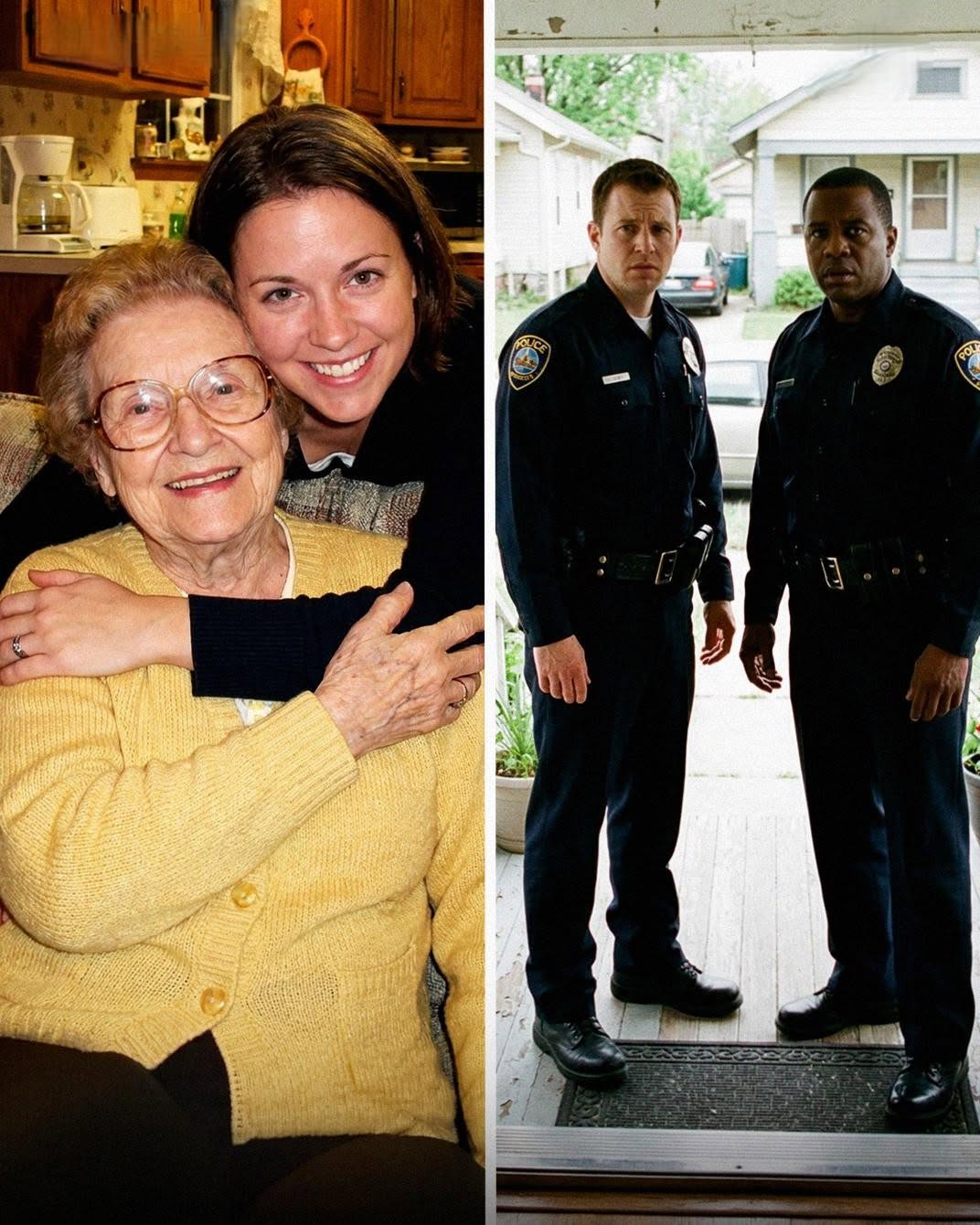
For the first time in years, I allowed myself to sit still.
No accusations.
No investigations.
No court hearings.
Just the gentle creak of Mrs. Whitmore’s rocking chair and the soft rustle of leaves moving through the evening air.
The past few weeks had felt unreal.
One moment I was mourning the loss of a friend.
The next, I was fighting to prove I wasn’t a criminal.
Even after my name was cleared, the damage lingered.
Some neighbors avoided eye contact.
Others offered awkward apologies for believing the rumors.
I accepted their words politely, but something inside me had changed.
I had learned how quickly people can mistake accusation for truth.
And I had learned how valuable it is when someone believes in you despite appearances.
A week later, Mrs. Whitmore’s attorney called again.
There was one final matter regarding the estate.
When I arrived at his office, he handed me a small wooden box.
“It was meant specifically for you,” he explained.
Inside were dozens of photographs.
Pictures spanning nearly three years.
At first I didn’t understand.
Then I looked closer.
There was a photo of me changing a lightbulb in her kitchen.
Another of us laughing over a burned batch of cookies.
One showed me helping her decorate her Christmas tree.
Another captured us sitting on the porch drinking tea during a summer storm.
My eyes filled with tears.
I hadn’t even known she was taking these photographs.
Tucked beneath them was another envelope.
My hands trembled as I opened it.
The handwriting was unmistakably hers.
“My dear girl,
If you’re reading this, then you’ve probably spent far too much time worrying about what other people think.
Stop.
You spent years believing you had nothing left to give after losing your daughter.
You were wrong.
You gave me friendship.
You gave me dignity.
You gave me reasons to look forward to tomorrow.
My children shared my blood, but you shared my life.
There is a difference.
Do not become bitter because of what happened.
The world already has enough bitter people.
Remain kind.
Remain stubborn.
And for heaven’s sake, don’t stop making that terrible tea you insist on serving.”
I laughed through my tears.
That was exactly the sort of joke she would make.
At the bottom of the letter was one final sentence.
“Family is not always the people who arrive first.
Sometimes it is the people who stay.”
I folded the letter carefully and held it against my chest.
For months after her death, I continued visiting the porch.
Not because I couldn’t move on.
But because it reminded me of something important.
Loss and love often occupy the same space.
The deeper the grief, the deeper the connection that created it.
Eventually, word spread through the neighborhood about what had really happened.
People learned about the false accusation.
They learned about the years of care.
They learned about the will.
Most importantly, they learned about Mrs. Whitmore.
Not as a wealthy widow whose estate sparked conflict.
But as a woman who had spent her final years feeling valued and cared for.
Months later, I used a portion of the inheritance to create a small community program that paired elderly residents living alone with volunteers willing to visit them regularly.
The idea came directly from her.
Too many people were growing old in silence.
Too many doors remained unopened.
Too many stories went unheard.
The program started small.
Just six volunteers.
Then twelve.
Then twenty.
Soon, friendships began forming all across town.
Birthdays were celebrated.
Groceries were delivered.
Loneliness eased.
And every time I watched one of those connections grow, I thought of Mrs. Whitmore.
Her children eventually contested the will.
They lost.
The judge ruled that her intentions were clear, documented, and entirely voluntary.
That chapter finally closed.
Yet the greatest gift she left me wasn’t the house.
It wasn’t the money.
It wasn’t even the letter.
It was the reminder that kindness matters, even when nobody is keeping score.
Especially then.
Sometimes the people who change our lives arrive quietly.
They don’t make grand entrances.
They don’t demand attention.
They simply show up, day after day, until one morning you realize they’ve become family.
Mrs. Whitmore did that for me.
And in the end, I hope I did the same for her.
As the seasons changed and new families moved into the neighborhood, her old rocking chair remained on the porch.
Whenever visitors asked why I kept it there, I would simply smile.
Because some people leave behind more than memories.
They leave behind proof that love doesn’t require blood, obligation, or even a shared name.
Sometimes all it requires is showing up.
And staying.