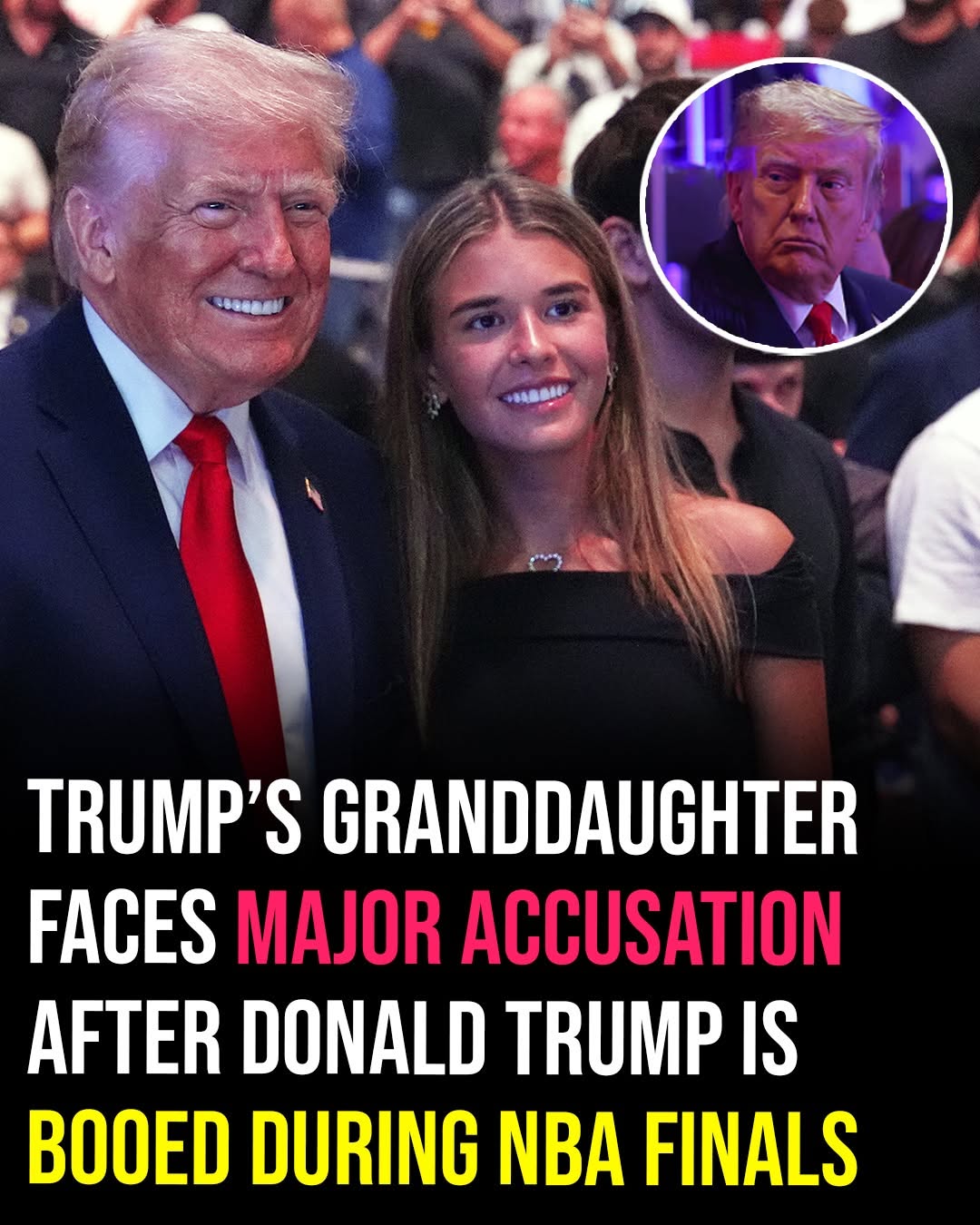
What was supposed to be a simple family memory quickly turned into a viral controversy.
When Kai Trump shared a short video from the NBA Finals, she likely expected followers to focus on the special moment she spent alongside her grandfather. Instead, viewers became fixated on something they believed was missing from the footage—and within hours, social media was flooded with accusations, debates, and competing explanations.
At the center of the dispute was a brief clip showing Kai Trump and former President Donald Trump during pregame ceremonies at the NBA Finals.
For Kai, the post appeared to be nothing more than a personal keepsake. The 19-year-old has increasingly shared glimpses of her life online, often posting family moments, sporting events, and behind-the-scenes experiences. This video seemed no different.
But viewers quickly noticed a discrepancy.
People who had watched the live television broadcast claimed the atmosphere inside the arena sounded dramatically different from what appeared in Kai’s version of the event. According to many online commentators, portions of the crowd reaction that had been audible during the live broadcast seemed absent or significantly reduced in the social media clip.
Soon, side-by-side comparisons began circulating.
Users posted clips from various broadcasts alongside Kai’s video, pointing to differences in crowd noise and questioning why the audio sounded so different. The comparisons spread rapidly across social media platforms, fueling speculation that the original sound had been altered, muted, or replaced entirely.
Critics argued that the edited audio changed the perception of what occurred inside the arena.
Supporters, however, urged caution before jumping to conclusions.
Media experts and broadcasting observers pointed out that several factors can affect audio in short social media videos. Mobile recordings, platform compression, alternate camera feeds, arena audio systems, and music licensing restrictions can all produce significant differences between what viewers hear on television and what ultimately appears online.
In many cases, content creators use audio captured directly from a phone rather than from the broadcast feed itself. Background crowd noise can vary dramatically depending on microphone placement, editing software, and even the location where a person was standing during the recording.
Others noted that social media platforms frequently alter audio quality during processing and compression.
Despite these explanations, the debate continued to intensify.
For some observers, the controversy became less about the video itself and more about broader questions regarding public image, media narratives, and the way political figures are portrayed in highly polarized environments.
Supporters of Donald Trump viewed the criticism as another example of opponents searching for controversy where none existed.
Critics argued that even small edits can influence how public events are perceived.
As discussions expanded, the original family moment became almost secondary to the larger conversation unfolding around it.
Throughout the controversy, Kai Trump largely remained silent.
She did not publicly engage with most of the criticism or attempt to explain the technical details behind the clip. That silence only fueled further speculation, with some interpreting it as avoidance while others viewed it as a decision not to amplify the controversy.
The situation highlights a growing reality of modern social media.
Even the most personal posts can become subjects of intense public scrutiny when they involve high-profile public figures. A video intended as a family memory can quickly evolve into a national debate once millions of viewers begin dissecting every frame, every sound, and every perceived omission.
In today’s digital landscape, context often travels more slowly than controversy.
Small details can become major talking points.
Assumptions can spread faster than explanations.
And a few seconds of footage can generate days of discussion.
Whether the differences in audio resulted from routine editing, technical limitations, or something else entirely remains a subject of debate among viewers. What is certain is that a moment Kai Trump described as special unexpectedly became the focus of a much larger conversation.
What began as a simple post from a granddaughter sharing a memorable evening with her grandfather ultimately transformed into yet another example of how quickly public perception can shift in the age of viral media.
And as arguments continue across social platforms, one question still lingers for many observers:
Was the video simply a personal memory captured from a different perspective—or did viewers witness an example of how easily digital content can reshape the way events are remembered?