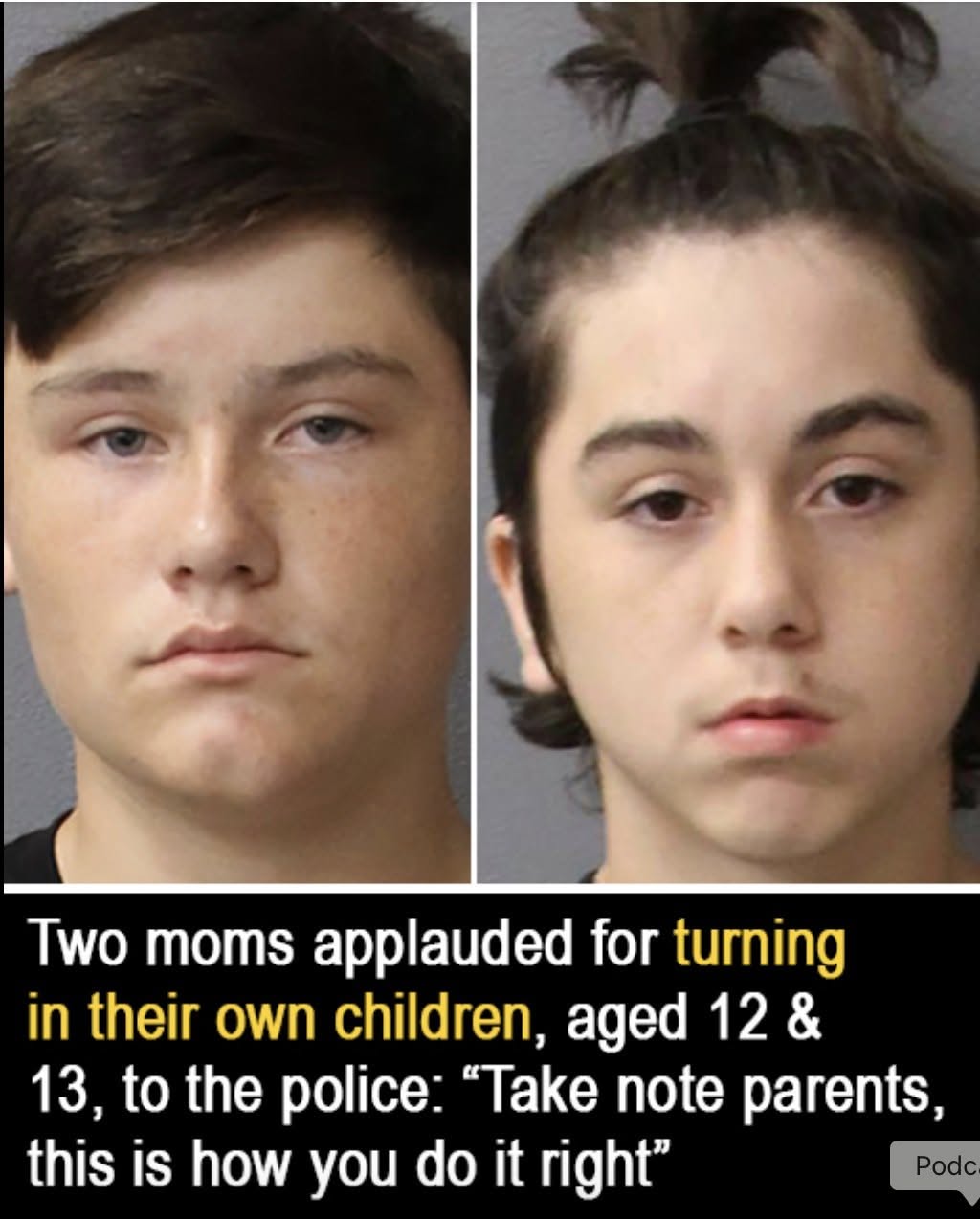
Two boys thought no one would ever know.
Under the cover of darkness, what may have started as a reckless decision quickly spiraled into something far more serious. Hidden from teachers, classmates, and neighbors, they entered a place that had once been a source of learning, imagination, and opportunity for hundreds of children. In their minds, they may have believed it was just a prank, an adventure, or a moment of excitement that would be forgotten by morning.
They were wrong.
By the time they left, shelves had been overturned, books had been thrown across the floor, equipment had been damaged, and a school library had been transformed into a scene of destruction. Pages that once inspired young readers lay scattered among broken furniture and shattered glass. What had taken years to build had been devastated in a matter of minutes.
And yet, the most shocking part of the story wasn’t what happened inside the building.
It was what happened afterward.
When deputies arrived at Friendship Elementary that night, they were met with a scene that looked less like youthful mischief and more like the aftermath of a deliberate rampage. The damage was impossible to ignore. A shattered glass door marked the point of entry. The media center had been heavily vandalized. Shelves were knocked over, materials destroyed, and valuable educational resources left unusable.
Investigators quickly realized this wasn’t a harmless prank.
The financial cost alone exceeded $50,000, but the true loss extended beyond dollars and cents. Teachers thought about the students who relied on those resources. Librarians imagined the time required to rebuild what had been damaged. Parents wondered how children could inflict such destruction on a place designed to help them succeed.
The community was stunned.
As news spread, anger and disbelief followed. People searched for explanations. Some blamed poor judgment. Others questioned discipline, values, or social influences. Everyone seemed to ask the same question:
Who would do something like this?
The answer arrived sooner than anyone expected.
Security cameras had captured footage of the individuals responsible. Although the images were grainy and the boys attempted to conceal their identities, there were still enough details to tell a story.
The footage eventually reached two households.
Two mothers sat down and watched.
At first, they probably hoped they were mistaken.
Parents naturally want to believe the best about their children. Even when evidence appears overwhelming, the instinct to protect them can be incredibly strong. Every mother wants to think there must be another explanation, another possibility, another person behind the mask.
But as the video continued, recognition became impossible to deny.
The way one boy moved.
The shape of a jacket.
A familiar gesture.
Small details that only a parent would immediately recognize.
And suddenly, the nightmare became real.
The children responsible weren’t strangers.
They were their sons.
In that moment, the mothers faced a choice that many parents pray they never have to make.
They could remain silent.
They could make excuses.
They could convince themselves that protecting their children meant shielding them from consequences.
Or they could do something much harder.
They could tell the truth.
What happened next surprised many people.
Rather than looking away from what they had seen, the mothers confronted it directly. They contacted law enforcement and identified their own children.
It was a decision that likely brought enormous pain.
No parent dreams of making that phone call.
No parent wants to imagine their child entering the criminal justice system.
No parent enjoys watching consequences unfold.
Yet these mothers understood something important: protecting a child from accountability is not always the same thing as protecting a child.
Sometimes the two are opposites.
When the boys were confronted with the evidence, they confessed.
The reality they had tried to hide could no longer be denied. The masks, the darkness, and the belief that nobody would ever find out had all failed. The truth was now impossible to escape.
As the story became public, reactions were intense.
Many people expressed outrage over the destruction. Community members mourned the damage done to a school resource that benefited countless students. Some argued the boys deserved significant consequences for their actions. Others focused on the financial burden placed upon the school and taxpayers.
But alongside the anger came another response.
Many people praised the mothers.
Not because anyone celebrated the boys’ mistakes.
Not because the damage wasn’t serious.
But because the mothers chose honesty over denial.
In a world where parents are sometimes accused of making excuses for their children’s behavior, these women took a different path. They placed responsibility ahead of comfort. They accepted short-term heartbreak in pursuit of a lesson that could potentially alter the course of their sons’ lives.
That choice resonated deeply with many observers.
They understood how difficult it must have been.
Imagine recognizing your child in surveillance footage connected to a major act of vandalism. Imagine knowing that one phone call could result in legal consequences, public embarrassment, and years of difficult conversations. Imagine carrying the knowledge that your decision could affect your child’s future.
Then imagine making that call anyway.
Not because you stopped loving your child.
But because you loved them too much to let them believe actions have no consequences.
Between the wrecked bookshelves and the courtroom doors lies a difficult truth about parenting.
Love is not always gentle.
Sometimes love requires uncomfortable conversations.
Sometimes it requires setting boundaries.
Sometimes it requires allowing children to experience the consequences of choices they wish they could take back.
Those consequences can feel cruel in the moment.
Yet they often become the very lessons that prevent even greater mistakes later in life.
The boys who entered that school likely never imagined how quickly their actions would escalate. What may have felt like a temporary thrill became a life-changing event. Their families, their community, and their futures were suddenly tied to a decision made in a matter of minutes.
The damage to the library can eventually be repaired.
Books can be replaced.
Shelves can be rebuilt.
Glass can be installed again.
But the deeper lesson from this story may have less to do with vandalism and more to do with responsibility.
Because while two boys damaged a school, two mothers demonstrated something equally powerful.
They showed that accountability begins at home.
They showed that character is revealed not only when children make mistakes, but when parents decide how to respond to those mistakes.
And perhaps most importantly, they reminded everyone that the hardest acts of love are often the ones that hurt the most.
For those mothers, turning in their own sons may have felt like breaking their hearts.
But they understood something many people never fully learn:
Real love does not protect someone from the truth.
Real love helps them face it.