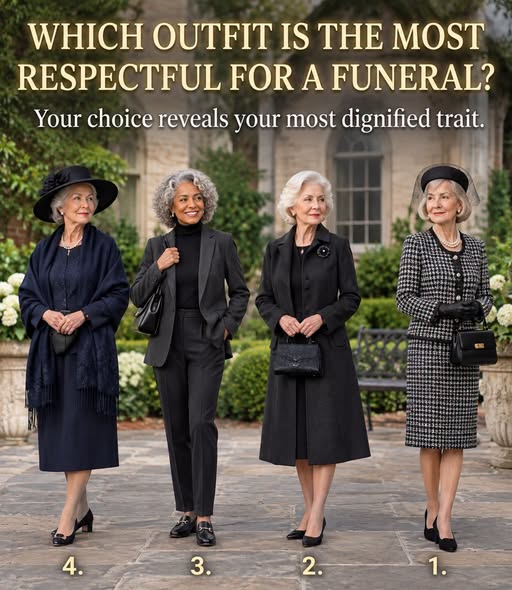
Grief can leave us speechless, but the way we show up can speak volumes. Four funeral outfits offer a gentle invitation to consider how you comfort others when words fall short. The look you feel drawn to might spark an unexpected reflection on devotion, quiet compassion, or the strength you bring to someone facing their hardest and loneliest goodbye. While clothing cannot define a person’s character, the different styles can serve as simple prompts for thinking about the ways people express care during difficult moments.
The first outfit—black suit, hat, pearls, and gloves—evokes tradition and devotion. If it feels right to you, perhaps familiar customs help you express care when emotions are overwhelming. Dependability can be its own kind of comfort. The second outfit represents sincerity and humility: a preference for offering support without seeking attention. Its message is simple but meaningful—you can make someone feel less alone by listening, staying close, and asking for nothing in return. Sometimes the quietest presence can provide the greatest reassurance to someone who is struggling with loss.
The third outfit, pairing trousers with a turtleneck, coat, and loafers, suggests practical kindness: bringing a meal, handling an errand, or taking responsibility when others feel overwhelmed. The fourth, a navy suit with a wide-brimmed hat, shawl, and necklace, evokes thoughtfulness and gentle dignity. These associations are playful prompts, not a personality assessment. Clothing cannot measure compassion, and mourning customs differ. Whatever you choose, respect for the family and a willingness to offer comfort matter most.
Ultimately, there is no single correct way to dress for a funeral, just as there is no universal way to grieve or support someone experiencing loss. Some people find comfort in traditional clothing that reflects the seriousness of the occasion, while others choose a simple, understated outfit that allows them to focus on being present. The most meaningful gesture is often not the clothing itself but the respect behind the choice. Arriving quietly, offering sincere condolences, helping with practical needs, or simply remaining beside someone who is hurting can communicate care in ways that no outfit ever could.