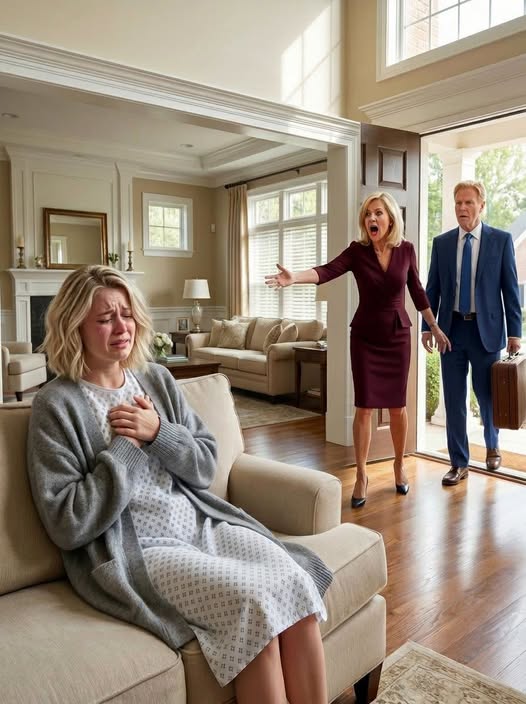
When my mother signed the documents to release me against medical advice, the hospital wristband was still firmly pressed against my flesh. The nurse was standing in the hallway, her hands dangling in the air as though she could literally block our progress to the elevator, and I can still picture the desperate expression in her eyes. Citing my unstable oxygen levels and the serious risk of respiratory collapse if I departed before another night of observation, she talked with a desperate haste. She was not even acknowledged by my mother. She saw the medical staff as little more than roadblocks to a prearranged timetable. With a tone that had silenced me for twenty-four years, she proclaimed that I was returning home.
I had passed out at my desk in Columbus only forty-eight hours before. What I initially believed to be a persistent cold had developed into a serious respiratory infection that was endangering my ability to breathe. I recall the oxygen mask’s intense pressure, the emergency room’s dazzling fluorescent lights, and the doctor’s dire admonition that I should only be receiving medical attention. However, in my family’s warped perception of reality, I was a logistical annoyance rather than a patient in crisis. My unexpected hospitalization was perceived as a personal insult to my parents’ and younger brother’s planned beachside vacation in Florida. They had persuaded themselves that I was just being dramatic to get attention and that the physicians were lying for financial gain.
My mother was there with my clothing and a frigid expression of annoyance as soon as I was able to sit up without the room spinning. I told her that my breathing was still laborious and shallow, and that my legs felt like lead. With a fierce hiss in her voice, she leaned in to inform me that I was wasting everyone’s time and embarrassing the family. Instead of watching his daughter gasp for oxygen, my father stayed by the window, silent and aloof, scrolling through his flight confirmations like if he were waiting for a train. They refused to return me to my flat, where I had personal belongings. Rather, they took me by car to their home outside of the city. I asked to get groceries and medication using my debit card during the ride. When my mother casually said that they had used my account to pay for the resort deposit and the rental car, she didn’t even glance at me.
A different form of suffocation was the shock of that realization. After paying my rent, I had put in a lot of effort to save a little cushion, which they quickly depleted in order to upgrade their flight and guarantee a view of the beach. While I sat in the passenger seat, struggling to stay conscious, my money was paying for their luxury. They moved me inside their home with the detached efficiency of movers moving a piece of furniture they didn’t really like. My mother indicated a bag of crackers and canned soup while placing a single glass of water on the table. She said they would return in four days and advised me to rest. Before I noticed the suitcases arranged by the front entrance, I assumed it was a terrible joke.
Before the sun came up the following morning, they departed. The crunch of tires on gravel and the muffled sound of the garage door greeted me as I woke, and then there was a deep, heavy silence. My inhaler was almost empty, my phone was dying, and there was just rotten fruit and condiments in the refrigerator. With each quick, deliberate breath, my lungs burned as I attempted to stand and collapsed back onto the ground. The family calendar on the kitchen wall made fun of me. My mother had scrawled the word “Vacation” in thick, cheery blue marker throughout the current week.
I used all of my resolve to try to survive for the first several hours. To get from the sink to the counter without falling, I pulled a kitchen chair across the linoleum. I contacted my mother and then my father after I managed to get my phone to switch on. My dad responded, sounding irritated that his breakfast at the airport had been interrupted. He advised me to take some over-the-counter cough syrup and warned me not to ruin the trip with my “panic.” My brother was even worse; he laughed, telling me to start acting like an adult before hanging up on me. I realized then that I had been trained my entire life to protect the image of our “perfect” family, even at the cost of my own survival. I was terrified of what the neighbors would think if they saw an ambulance.
Eventually, the pain overcame the shame. I texted the neighbor across the street, Mrs. Delaney, in an uneven and fragmented manner. In a matter of minutes, she arrived at the door. She caught me on the kitchen floor using the garage code my mother had given her for parcels, without asking permission. Despite my objections about “causing a scene,” she promptly dialed 911. I learned everything I needed to know from the paramedics’ shocked expressions when they realized I had been abandoned after being discharged against medical advice. While my family was using my money to catch a plane, I was dying in an empty house.
The social worker at the hospital had me tell the truth. She posed challenging queries regarding medical meddling and financial control. I called it abuse for the first time. It was a habit of deliberate cruelty rather than merely a poor vacation decision. With her assistance, I recorded the timeline of my forced dismissal, froze my accounts, and reported the theft of my money to the police. The calls from Florida eventually began to come in while I was recuperating under real medical care for the next three days. They called because the resort had rejected their card when the bank reported the fraudulent payments, not to see how I was doing.
Their character was demonstrated by the messages they left. I was termed selfish by my mother for “humiliating” the family. I was accused by my father of exaggerating the situation. In jest, my brother expressed his hope that the drama would be worthwhile. I didn’t remove any of them. As proof of the folks I was eventually leaving behind, I kept them all. I did not return to the residence with the blue marker on the calendar after my second discharge. My manager at work welcomed me with emergency leave and sincere support, and Mrs. Delaney transported me to my own apartment.
Once, my mother came to my door and yelled that I was picking strangers over family members. I threatened to call the police if she didn’t leave while standing on the other side of the deadbolt. I realized at last that blood was only a tool for manipulation and never a bond between them. Toxic loyalty can be loosened by survival. Because of a neighbor’s generosity and the professionalism of strangers who saw a human being where my family saw a nuisance, I barely survived. I have given up attempting to change the narrative, but they continue to tell family members that I am erratic and dramatic. I’m too preoccupied with breathing, standing on my own two feet, and understanding that the most costly aspect of freedom is comprehending that you didn’t need their consent to survive in the first place.