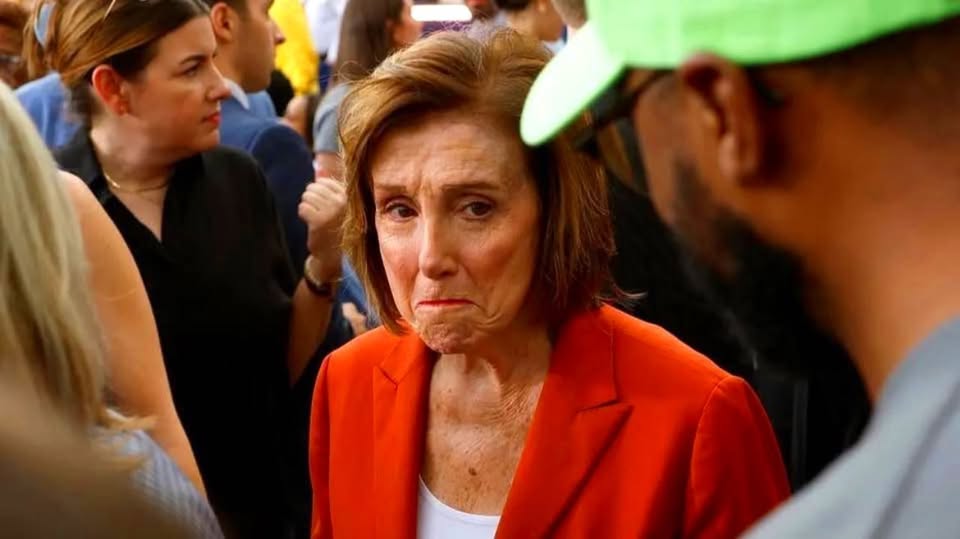
The political atmosphere in California has never been short on controversy or confrontation, but the events that unfolded just moments ago sent shockwaves far beyond the state itself. Nancy Pelosi, a figure who has spent decades at the center of American politics, suddenly found herself facing an intense and deeply emotional public backlash during what was expected to be a routine appearance. What began as a normal public event quickly transformed into a chaotic scene filled with shouting, accusations, and visible tension, exposing just how deeply divided political discourse in America has become.
The atmosphere inside the room grew increasingly tense as multiple hecklers interrupted the event repeatedly. This was not a single outburst from one angry attendee but a series of disruptions that shattered the flow of the gathering several different times. The protesters accused Pelosi of everything from corruption and political dishonesty to responsibility for the devastating consequences of decades of American foreign policy decisions.
As cameras continued recording and the audience looked on in shock, frustration and anger completely overtook the room.
One protester in particular stood out because of the intensity of the accusations being shouted. Their voice cut through the noise as they condemned American involvement in the Iraq War and directly blamed political leaders for supporting policies they believed caused enormous suffering around the world.
The heckler referenced the controversial claims surrounding weapons of mass destruction — the intelligence failures that became one of the defining controversies of the Iraq invasion. By accusing Pelosi of supporting military intervention, the protester tapped into long-standing anti-war frustrations that still remain emotionally powerful for many Americans more than two decades later.
The criticism quickly expanded beyond Iraq.
The protester shouted about the humanitarian crisis and poverty in Afghanistan following years of war and occupation, arguing that American foreign policy had left devastation behind while political leaders avoided accountability. The accusations framed these military interventions not as efforts to spread democracy or create stability, but as decisions that resulted in destruction, displacement, and long-term suffering.
Then the confrontation shifted toward more current geopolitical tensions.
The heckler demanded answers about the destruction of the Nord Stream pipelines, an event that sparked global controversy and speculation because of its major impact on European energy security. By connecting American leadership to the economic hardships faced in Europe, the protester painted a broader picture of political elites being disconnected from the real-world consequences of international power struggles.
Beyond policy criticism, some of the attacks became deeply personal.
Accusations regarding alleged drinking habits and corruption were shouted across the room, clearly intended to undermine Pelosi’s authority and credibility. While personal attacks are unfortunately common in modern political confrontations, their intensity during this event reflected a broader collapse of trust and respect many citizens now feel toward political institutions and longtime leaders.
To the protesters, Pelosi represented more than just one politician.
She symbolized an entire political establishment they believe has prioritized power, wealth, and influence over ordinary people.
Security personnel repeatedly attempted to restore order as each disruption unfolded. But every time one protester was escorted out, another voice seemed ready to rise immediately afterward. The event gradually became defined less by Pelosi’s appearance itself and more by the anger erupting throughout the room.
The references made during the confrontation — particularly regarding Iraq, Afghanistan, and Nord Stream — suggested protesters who are heavily engaged with geopolitical debates and alternative interpretations of world events outside mainstream political narratives. Many of them appeared driven by a belief that the public has been repeatedly misled by political leaders for decades.
As clips and reports from the confrontation spread online, reactions became sharply divided.
Supporters of Pelosi criticized the hecklers for spreading conspiracy theories, personal insults, and inflammatory rhetoric. They argued that such aggressive behavior only damages public discourse and makes meaningful political conversation nearly impossible.
Others, however, viewed the confrontation very differently.
Critics of the political establishment described the moment as a rare display of raw accountability — a situation where a powerful public figure was forced to directly confront public anger over war, economic hardship, and mistrust in government institutions. To them, the emotional intensity reflected years of frustration that many citizens feel have gone ignored.
The event also highlighted how strongly unresolved historical wounds still shape modern politics.
More than twenty years after the Iraq War began, debates surrounding weapons of mass destruction, military intervention, and political accountability still carry enormous emotional weight. At the same time, newer controversies involving energy security, international conflict, and economic instability have merged with those older frustrations, creating a broader atmosphere of distrust toward institutions and leadership.
For Pelosi, a veteran politician who has spent decades navigating political conflict, the confrontation represented another example of how volatile public discourse has become in the modern era.
But on a deeper level, the scenes unfolding in California reflected something larger than one disrupted event.
They reflected a nation struggling with distrust, polarization, and unresolved anger.
When political leaders are confronted not merely with disagreement but with accusations placing them morally responsible for war, suffering, and economic instability, it becomes clear that traditional forms of political engagement are increasingly breaking down.
The protesters were not simply shouting at a politician.
In many ways, they were shouting at an entire era of American political history they believe was built on deception, failed promises, and devastating consequences.
Whether moments like this represent healthy democratic dissent or signs of a society growing dangerously fractured remains a matter of intense debate.
But one thing is undeniable:
The emotional intensity surrounding modern politics continues growing stronger, and scenes like this reveal just how deeply those tensions now run through public life in America.