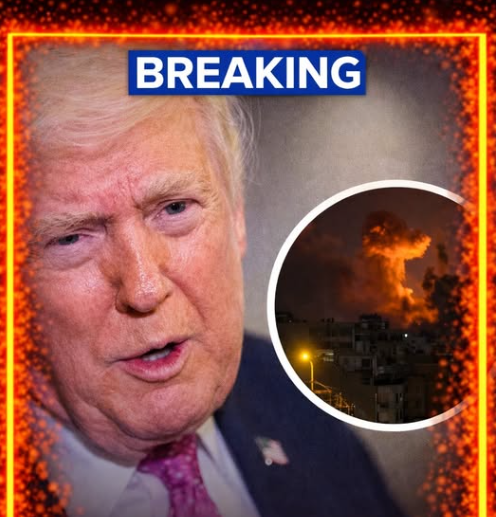
Trump’s words stunned the world. In a single, swaggering sentence, he boldly claimed that he had overthrown a regime and reshaped the trajectory of a war entirely according to his own will and vision. The statement, delivered with characteristic bravado, painted a picture of decisive triumph, as if a complex geopolitical struggle could be reduced to one man’s proclamation.
Yet beyond the glare of cameras, microphones, and global headlines, the reality on the ground in Tehran tells a much more complicated story—one that refuses to conform to the neat narrative he presented. While Trump’s rhetoric suggested that power had crumbled beneath his influence, the truth is that it has shifted in subtle but significant ways, remaining very much in the hands of those determined to maintain control. Allies, both regional and international, are showing signs of unease; oil prices are climbing, biting into household budgets and economic stability; and a critical U.S. partner has just issued a chilling warning, underscoring that the path forward is far from simple or assured.
Donald Trump’s boastful claim that he had engineered “regime change” in Iran collides sharply with the hard realities experienced on the ground. Following the assassination of Ayatollah Ali Khamenei, contrary to the president’s declaration of victory, Iran’s leadership did not collapse into chaos; instead, it reorganized and adapted. Mojtaba Khamenei, the Ayatollah’s son, assumed the role of Supreme Leader, ensuring continuity at the highest level of power. The machinery of the Iranian state—the government, the military, and the Islamic Revolutionary Guard Corps (IRGC)—continued to function, albeit with personnel changes.
Key figures were replaced rather than eliminated, and institutional structures held firm. Meanwhile, the conflict itself grinds on relentlessly, diplomacy moves at a painfully slow pace, and ordinary people—both inside Iran and beyond—bear the heavy cost of these ongoing struggles, facing uncertainty, danger, and hardship every day. The stark contrast between rhetoric and reality is impossible to ignore: proclamations of triumph do not halt the workings of entrenched power or the human suffering of war.
At the same time, the political pressure on Trump within the United States is mounting rapidly. Rising oil and gas prices are straining American household budgets, fueling anxiety and frustration just months ahead of the crucial mid-term elections. Regional allies in the Gulf are expressing growing wariness toward an open-ended conflict, wary of becoming entangled in a confrontation with unpredictable consequences. Mediation efforts led by Pakistan, with support from Egypt and Turkey, signal the depth of the search for a diplomatic exit, reflecting a sense of desperation among those hoping to prevent further escalation. From Canberra, Australian Prime Minister Anthony Albanese has publicly demanded clarity from Washington: what is the real endgame in Iran? While he firmly supports preventing a nuclear-armed Iran and has expressed “nothing but contempt” for the current regime, he cautions against attempting to force change from the outside. Albanese’s call for de-escalation serves as a reminder that grand victory speeches and political theatrics cannot replace a coherent strategy, nor can they account for the immense human, economic, and geopolitical costs that continue to mount as a result of military action and unresolved conflict. In short, the picture on the ground is far more complex than Trump’s statements suggest, and navigating it will require far more than bravado—it demands careful planning, diplomacy, and an honest reckoning with consequences that extend well beyond headlines.