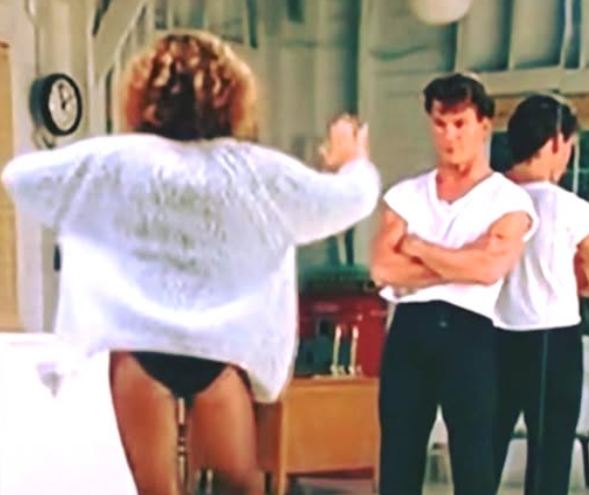
One of the rare movies from the 1980s that has managed to maintain its emotional relevance over several generations is Dirty Dancing. While many movies from that era are mostly remembered for nostalgia, this one is still seen because of the emotional depth of its performers and plot in addition to its music and dance. Its ability to maintain relevance long after its first release stems from the way it strikes a balance between simplicity and nuanced thematic meaning.
Fundamentally, the movie seems to be a simple coming-of-age story about dance, first love, and summertime experiences. Beneath this approachable exterior, though, comes a more complex examination of class structure, identity, social limits, and individual autonomy. These underlying concepts are weaved organically into character interactions and emotional development rather than being given in an overtly didactic way, which adds to the film’s enduring interpretive complexity.
Jennifer Grey and Patrick Swayze’s Performances
The performances of Patrick Swayze and Jennifer Grey as Johnny Castle and Frances “Baby” Houseman are largely responsible for the movie’s influence. Their depictions create a dynamic that develops gradually, depending not only on speech but also on timing, body language, and nuanced emotional clues.
The way emotion is conveyed through presence rather than exposition is what sets their on-screen interaction apart. Rather than including lengthy verbal exchanges, many of the movie’s most memorable scenes are built around movement, quiet, and shared physical space. This strategy increases viewer engagement and rewatch value by encouraging a more natural interpretation of emotional growth.
From a production standpoint, reports from individuals who worked on the movie indicate that there was some conflict in the performers’ working relationship. However, as the emotional tug-of-war between them seems to naturally translate into their characters’ developing connection, this intricacy might have indirectly contributed to the genuineness of their performances. As a result, the portrayal seems more real-time and less theatrically produced.
Character Development and Story Structure
Dirty Dancing’s structure is purposefully constrained, concentrating mostly on a small number of key connections and emotional arcs. The story focuses on Baby, the protagonist, as she progresses from observation to involvement and, finally, self-definition rather than branching out into several subplots.
The character of Johnny Castle serves as both a stimulus and a counterbalance in this development. His involvement challenges Baby’s presumptions about class, independence, and personal agency in addition to being amorous. Their interaction serves as a framework for the exploration of more general concepts without the need for explicit explanation.
Emotional development is kept at the center because to this deliberate narrative focus. The film’s thematic coherence is strengthened by the gradual development of each contact, which creates a sense of continuity.
Choreography as a Language of Emotion
The film’s use of choreography as a narrative element as well as a performance is one of its distinguishing characteristics. Dance sequences translate emotional impulses into physical movement, serving as extensions of character development.
Kenny Ortega, a choreographer, has talked about how important it is to base the dance piece on emotional authenticity rather than just technical exhibition. The choreography allowed movement to function as communication rather than ornamentation, reflecting interpersonal tension, vulnerability, and the development of trust.
Dance thus takes on the role of a structured language in the movie. Characters’ developing trust is shown through repetition, synchronicity, and physical closeness. One of the main reasons the movie is still studied and brought up in conversations about cinematic narrative is because of this interaction between movement and emotion, which is essential to its identity.
Narrative Focus, Editing, and Structure
Like all movies, Dirty Dancing was edited to maintain rhythm and narrative coherence by removing or changing some scenes. These choices are common in the film industry, especially for productions that primarily rely on emotional rhythm.
Scenes that were eventually eliminated were assessed based on their contribution to overall coherence rather than necessarily being of low quality. Pacing is just as crucial to narrative filmmaking as content, particularly when telling emotionally charged subjects. Reducing or eliminating content that might be powerful on its own but could interfere with the narrative’s flow is frequently necessary to keep attention on the main emotional arc.
The finished film is a meticulously chosen collection of scenes meant to lead audiences through a certain emotional journey. Without changing the story’s structure, the lack of further scenes frequently stimulates the audience’s imagination and gradually increases the story’s perceived depth.
Important Moments’ Cultural Significance
Some scenes from Dirty Dancing, most notably the last lift sequence, have become iconic in popular culture. This scene has been frequently cited, examined, and reenacted, and it has come to represent the film’s emotional climax.
Its timing and simplicity are what make it so powerful. The scenario conveys resolution through movement, trust, and visual synchronicity rather than conversation or outside explanation. This contributes to its widespread awareness by enabling it to cross linguistic and cultural barriers.
Repeated viewings, media references, and adaptations all contribute to the film’s ongoing cultural influence. It continues to be relevant because every new audience interacts with it in a different way and frequently finds elements that were not highlighted in previous viewings.
Emotional Accessibility and Thematic Universality
The film’s global thematic structure is a major factor in its ongoing appeal. Ideas like self-discovery, emotional autonomy, personal accountability, and negotiating social expectations are timeless and culturally relevant.
The movie incorporates these concepts into character-driven events rather than presenting them in an abstract manner. This enables viewers to interact with the content emotionally as opposed to just analytically.
Accessibility is further improved by the incorporation of narrative, dancing, and music. Each component works in concert with the others to create a seamless emotional setting that improves viewer interaction.
Long-Term Legacy and Persistent Significance
Dirty Dancing still holds a unique place in popular culture decades after it was first released. Its legacy is maintained not merely by nostalgia but also by the emotional clarity of its execution and the structural integrity of its narrative.
The movie shows how narrative design, movement, and performance can come together to create a piece that has significance outside of its initial setting. The film’s emotional core remains accessible and clear despite changing styles in filmmaking.
In the end, Dirty Dancing’s ability to convey human experiences in a straightforward yet nuanced manner is reflected in its ongoing popularity. It continues to serve as an illustration of how narrative can endure across generations without losing its impact when it is based on emotional sincerity and careful building.