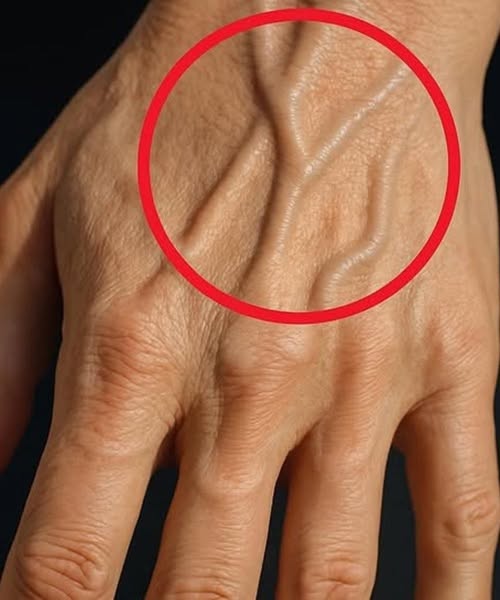
If you’ve ever glanced at your hands and noticed a sudden network of blue, raised veins, you’re definitely not alone. Lately, more people have started to worry that visible veins might be some kind of “silent warning” about deeper health problems. With so much health advice circulating online—and not all of it accurate—there’s been a growing belief that prominent hand veins are directly linked to issues with the body’s “filtration system,” especially the kidneys. But before jumping to conclusions or assuming the worst, it’s important to separate reliable medical facts from misleading internet claims.
In most cases, visible veins in the hands are completely normal. They aren’t a sign of illness, but rather a result of natural factors like genetics, lifestyle, and aging. One of the main reasons veins become more noticeable over time is that the skin gradually becomes thinner and loses collagen, which once helped conceal what lies beneath. As that protective layer fades, the veins underneath become easier to see. People with lower body fat also tend to have more visible veins, simply because there’s less tissue covering them, allowing the veins to sit closer to the surface.
Activity levels and environmental conditions can also make a big difference in how prominent veins appear. During exercise, your body increases blood flow, which causes veins to expand and become more visible. The same effect can happen after a hot shower or in warm weather, when blood vessels dilate to help regulate body temperature. Even hydration plays a role—if you’re slightly dehydrated, the reduced fluid volume in your bloodstream can make veins appear more defined than usual.
As for the idea that visible veins signal problems with the kidneys or liver, medical evidence does not support this claim. In reality, if the body’s filtration system were not functioning properly, you would more likely see the opposite effect. Conditions like fluid retention—known medically as edema—cause swelling in areas like the hands, feet, and face. This swelling actually makes veins less visible, not more, because the excess fluid masks them beneath the skin.
So, if hand veins aren’t a warning sign, what should you pay attention to? Health professionals point to more consistent and measurable symptoms when it comes to kidney or liver concerns. Ongoing swelling in the ankles or face, persistent fatigue that doesn’t improve with rest, and noticeable changes in urination—such as unusual foam or shifts in frequency—are far more meaningful indicators. High blood pressure and unexplained nausea can also signal that something isn’t working properly and may require medical evaluation.
Ultimately, your hands reflect your age, your daily habits, and your natural body composition—but they don’t provide a direct window into the condition of your internal organs. While certain medical procedures, like dialysis, involve intentionally enlarging veins for treatment purposes, those changes are controlled and medically induced—not something that develops on its own as a warning sign.
If you’re truly concerned about your internal health, the most reliable way to get answers isn’t by observing physical appearance alone. Proper medical testing, such as blood work and professional evaluation, provides accurate insight into how your body is functioning. So the next time you notice those veins on your hands, there’s a good chance they simply reflect normal changes—like staying active, getting older, or needing better hydration. Focus on meaningful symptoms, and rely on real medical guidance rather than assumptions.