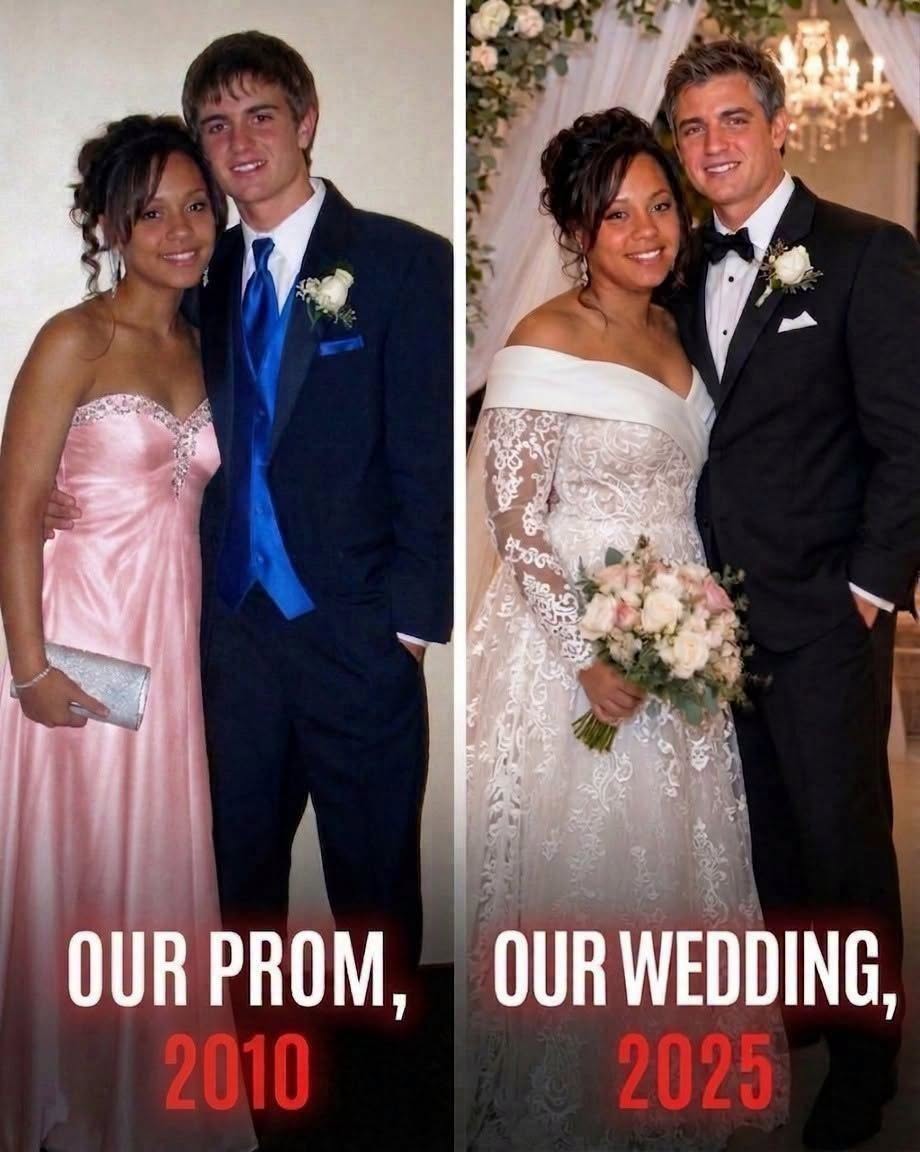
# I Thought I Knew My High School Sweetheart – Until I Overheard This Phone Call on Our First Anniversary
I always believed that marrying my high school sweetheart was the best decision I had ever made. We had grown up together, survived awkward teenage years, celebrated our first jobs, and promised each other that no matter what life brought our way, we would always choose each other.
His name was Daniel, and I had loved him since I was sixteen.
We met in the hallway outside our English classroom. He was the quiet boy who always sat near the window, drawing little sketches in the margins of his notebooks. I was the girl who talked too much whenever she got nervous. Somehow, we fit together perfectly.
By the time we graduated, everyone expected us to get married. Our friends joked that we had already lived through every stage of a relationship before most people had even experienced their first serious date.
And perhaps that was why I never questioned him.
Daniel had always been honest with me. At least, that was what I believed.
On our first wedding anniversary, he surprised me with a weekend at the little countryside hotel where he had proposed. I remember waking up that morning to find a handwritten note beside my pillow.
One year down, forever to go. I love you more than you know.
I smiled as I read it, feeling like the luckiest woman alive.
That evening, we had dinner at a small restaurant overlooking the lake. Daniel wore the navy-blue shirt I had bought him for his birthday, and I wore the silver necklace he had given me on our wedding day.
Everything felt perfect.
Until his phone rang.
We were back in our hotel room when it happened. Daniel was in the bathroom, getting ready for bed, and his phone was lying on the bedside table. The screen lit up with an unfamiliar number.
I didn’t think much of it.
Then the phone stopped ringing, and a message appeared.
“You promised you would tell her after the anniversary. I can’t keep pretending everything is fine.”
I stared at the screen.
Tell her what?
Before I could think, another message arrived.
“She deserves to know what happened that night.”
My heart began to pound.
I knew I shouldn’t look at his private messages. I had never been the kind of person who checked her husband’s phone or searched for reasons to distrust him.
But something about those words made my hands tremble.
Then the phone rang again.
This time, Daniel answered as he stepped out of the bathroom.
“Hello?” he said quietly.
I sat perfectly still, pretending to look through the photos on my camera while listening to his voice.
At first, he spoke so softly that I couldn’t make out the words. Then I heard him say something that made my stomach turn.
“I told you I’d handle it,” he whispered. “She doesn’t know anything.”
I felt as though the room had suddenly become smaller.
There was a pause.
Then Daniel said, “No. I haven’t told her about the baby.”
The word baby seemed to echo inside my head.
I looked down at my hands, unable to breathe properly.
A baby?
We had been trying to start a family for months. Every negative pregnancy test had left me disappointed, and Daniel had held me through every tear, telling me that our time would come.
Now he was standing only a few feet away, talking to someone about a baby I knew nothing about.
“I can’t do this tonight,” he continued. “It’s our anniversary. Please, just give me a little more time.”
He ended the call.
For several seconds, neither of us moved.
Then he turned toward me.
“Everything okay?” he asked.
I looked up at the man I had loved for nearly half my life.
For the first time, I wasn’t sure I recognized him.
“Daniel,” I said, forcing myself to keep my voice steady, “who were you talking to?”
His expression changed.
It was subtle, just a brief tightening around his eyes, but I noticed it.
“Nobody important,” he replied.
I swallowed hard.
“Then why did you say something about a baby?”
The silence that followed was the longest of my life.
Daniel sat on the edge of the bed and covered his face with his hands. When he finally looked at me, his eyes were filled with tears.
“I never wanted you to find out this way,” he whispered.
My chest tightened.
“Find out what?”
He reached for my hand, but I pulled it away.
And then he told me something I never could have imagined.
The woman on the phone wasn’t his girlfriend.
She wasn’t an old flame.
She was someone from our past—someone I had trusted, someone who had disappeared from our lives years ago, and someone whose name I had not heard in almost a decade.
When Daniel finally said her name, I felt the room tilt beneath me.
Because the last time I had seen that woman, she had been standing beside me at my mother’s funeral.
And the secret Daniel had kept all those years wasn’t just about him.
It was about a night neither of us had ever spoken of again.
A night that had changed both our lives before our love story had even begun.
And now, on our first wedding anniversary, I was finally about to learn the truth.
But the most shocking part wasn’t what Daniel had done. It was why he had spent all those years protecting me from it.