The corridors of American power have long felt the tremors of political dissent, but the current climate in 2026 carries a frequency of instability that feels distinctly modern and alarmingly high-stakes. Since returning to the White House, President Donald Trump has navigated a landscape of global volatility that has stretched the traditional limits of executive authority and diplomatic strategy. At the center of this turbulence is an escalating and bloody conflict in the Middle East, highlighted by coordinated Israeli airstrikes against Iranian targets—an escalation that has fractured international opinion and left a staggering human toll. Reports indicate more than 3,000 casualties, including over 1,000 civilians, turning debates over foreign policy into a matter of urgent national crisis.
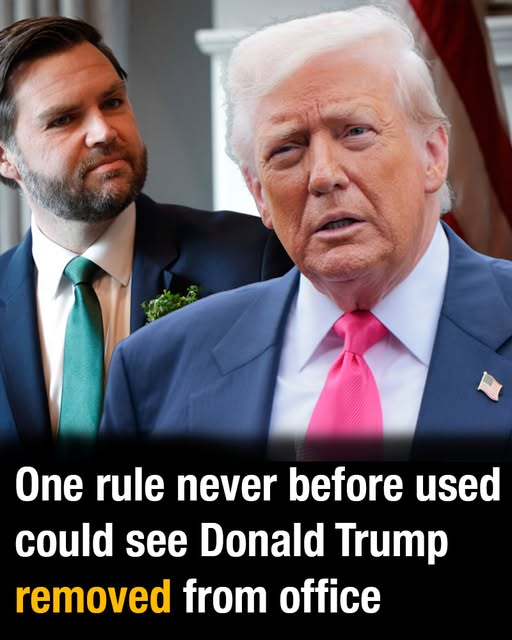
Amid this climate of violence and intelligence disputes, a startling voice has emerged from within the conservative establishment itself. Scott McConnell, co-founder of The American Conservative and a respected intellectual, has broken ranks to propose a solution more often found in political thrillers: invoking the Twenty-Fifth Amendment. This constitutional mechanism, intended for situations where a president is “unable to discharge the powers and duties of his office,” has never been used to forcibly remove a sitting president. Yet McConnell argues that the trajectory of the presidency—especially regarding the handling of the Iran conflict—requires this extraordinary intervention.
McConnell’s proposal is directed at Vice President JD Vance. Through a series of pointed public statements, he outlined a hypothetical but concrete path for a transition of power. He urged Vance to announce immediate support for a Twenty-Fifth Amendment transfer, framing it not as a coup, but as a stabilizing necessity for a nation on the brink. To ensure legitimacy, McConnell suggested pairing the transition with a pledge of bipartisanship and self-restraint: Vance could appoint a figure such as Democratic Senator Chris Murphy as his deputy—praised as a capable anti-war strategist—and publicly commit to not running for president in 2028. The aim of this “unity government” approach is to remove partisan ambition from the process and focus entirely on de-escalation.
The rationale for this radical step stems from deep skepticism toward the intelligence used to justify recent military actions. McConnell has criticized the White House’s reliance on reports from international allies, particularly Israeli Prime Minister Benjamin Netanyahu. He claims the administration received “BS intelligence” on Iranian capabilities, intelligence allegedly embraced by Trump while disregarding warnings from domestic agencies. The result, McConnell warns, could be a conflict with catastrophic consequences—a “genocide in our name.” The gap between official claims and reality has created a credibility crisis that, he argues, cannot be sustained.
President Trump has maintained a characteristically defiant posture, asserting that “strong” talks with Iranian officials are ongoing toward a potential ceasefire. Yet Iranian officials publicly denied that any substantive negotiations were underway, undercutting the administration’s statements and reinforcing the perception of isolation from both diplomatic realities and global strategic assessments.
McConnell also envisions a role for other high-ranking Republicans wary of the current trajectory. He floated the idea that Senator Marco Rubio could join the effort to negotiate a ceasefire, suggesting Rubio could maintain political relevance while positioning himself as a pragmatic peacemaker. This reflects a growing sentiment in some conservative circles: that the administration’s approach to the Middle East is not only a humanitarian concern but also a strategic liability, potentially alienating the Republican base and threatening long-term national security.
Invoking the Twenty-Fifth Amendment is a momentous act—a “nuclear option” of the Constitution requiring agreement from the Vice President and a majority of the Cabinet that the President is unfit for office. It is fraught with legal and political peril. For McConnell, a conservative commentator, to advocate for it signals a profound shift: some now see the risks of Trump’s presidency during active conflict as outweighing the unprecedented constitutional challenge. The debate has moved beyond policy or personality; it now centers on the stability of the executive office and the moral direction of American foreign intervention.
As the death toll climbs and prospects for a ceasefire remain uncertain, pressure mounts on JD Vance and the Cabinet. Global attention is not only on the battlefields of the Middle East, but also on the silent corridors of the White House, where the true test of constitutional resilience is unfolding. Whether McConnell’s call for a “Twenty-Fifth Amendment transition” remains an isolated intellectual plea or becomes the blueprint for historical change will depend on the coming weeks. In 2026, the traditional rules of political survival are being rewritten in real time, and the line between the unthinkable and the inevitable has never been thinner.
Meanwhile, the American public watches from the middle of this high-level tug-of-war, observing leaders navigate loyalty, duty, and national interest. The conflict with Iran has become a crucible, exposing deep divisions within the GOP and raising critical questions about presidential accountability. In this season of crisis, the “one rule never before used” has moved from a constitutional footnote to the center of the national conversation about the future of the Republic.